The secret lives of Canada lynx

The secret lives of Canada lynx

Using a Fitbit and a spy mic, scientists have discovered new insight into the behaviour of the elusive Canada lynx. A new study by researchers from McGill University, University of Alberta, and Trent University provides a first look at how miniaturized technology can open the door to remote wildlife monitoring.

“Working on one of the boreal forest’s top predators, the Canada lynx, we found that two different technologies, accelerometers and audio recording devices, can be used to remotely monitor the hunting behaviour of predators, even documenting the killing of small prey,” says lead author Emily Studd, a Postdoctoral Fellow under the supervision of Murray Humphries at McGill University and Stan Boutin at University of Alberta.

“We captured chases, screams of the prey as they were caught, calls of the prey as they escaped, and bones crunching, along with friendly and aggressive interactions between different lynx,” says Studd. Hear the recordings in Studd’s recent CBC interview.

“A lot of people want to know what wild animals do when we can’t see them. The ability to continuously record their movements and sounds in their natural environment can provide insight into mating rituals, parental care, social interactions – even how individuals differ from one another or change over time,” says co-author Allyson Menzies, a recent PhD graduate at McGill University.

According to the researchers, understanding the hunting behaviour of predators is key information for ecologists, providing insight into the wellbeing of an ecosystem.

“Unfortunately, predators are naturally secretive animals due to their need to sneak up on their prey, which makes studying them and recording this information incredibly difficult,” explains Studd. Their use of accelerometers and audio recorders provide two new, highly effective methods that can be applied to any predator to monitor behaviour and collect information.

“The Purr‐fect Catch: Using accelerometers and audio recorders to document kill rates and hunting behaviour of a small prey specialist,” by Emily K. Studd, Rachael E. Derbyshire, Allyson K. Menzies, John F. Simms, Murray M. Humphries, Dennis L. Murray, and Stan Boutin was published in Methods in Ecology and Evolution. This research is part of the Kluane Canada lynx project. Funding was provided for this project by the Natural Sciences and Engineering Research Council, the Weston Family Foundation, and Institut Nordique du Québec.

DOI: https://doi.org/10.1111/2041-210X.13605


from ScienceBlog.com https://ift.tt/3pbAlFZ

Tai chi about equal to conventional exercise for reducing belly fat in middle-aged and older adults

Tai chi about equal to conventional exercise for reducing belly fat in middle-aged and older adults

A randomized controlled trial found that tai chi is about as effective as conventional exercise for reducing waist circumference in middle-aged and older adults with central obesity. Central obesity, or weight carried around the midsection, is a major manifestation of metabolic syndrome and a common health problem in this cohort. The findings are published in Annals of Internal Medicine.

Tai chi is a form of mind-body exercise often described as “meditation in motion.” It is practiced in many Asian communities and is becoming increasingly popular in Western countries, with more than 2 million people practicing it in the United States. While it is known to be a suitable activity for older people including those who are not active, there previously has been little evidence on tai chi’s health benefits.

Researchers from the University of Hong Kong randomly assigned more than 500 adults over 50 with central obesity to a regimen of tai chi, conventional exercise, or no exercise over 3 months. Participants in the tai chi and exercise groups met for instructor-led workouts for 1 hour 3 times a week for 12 weeks. The tai chi program consisted of the Yang style of tai chi, the most common style adopted in the literature, and the conventional exercise program consisted of brisk walking and strength training activities. Waist circumference and other indicators of metabolic health were measured at baseline, 12 weeks, and 38 weeks. The researchers found that both the tai chi intervention and conventional exercise intervention group had reductions in waist circumference, relative to control. The reduction in waist circumference had a favorable impact on HDL cholesterol, or so-called good cholesterol, but did not translate into detectable differences in fasting glucose or blood pressure.

According to the study authors, their findings are good news for middle-aged and older adults who have central obesity but may be averse to conventional exercise due to preference or limited mobility.

Media contacts: Angela Collom at acollom@acponline.org. To speak with the corresponding author, Parco M. Siu, PhD, please email pmsiu@hku.hk.


from ScienceBlog.com https://ift.tt/3wOfMC2

Global warming already responsible for one in three heat-related deaths

Global warming already responsible for one in three heat-related deaths

Between 1991 and 2018, more than a third of all deaths in which heat played a role were attributable to human-induced global warming, according to a new article in Nature Climate Change.

The study, the largest of its kind, was led by the London School of Hygiene & Tropical Medicine (LSHTM) and the University of Bern within the Multi-Country Multi-City (MCC) Collaborative Research Network. Using data from 732 locations in 43 countries around the world it shows for the first time the actual contribution of man-made climate change in increasing mortality risks due to heat.

Overall, the estimates show that 37% of all heat-related deaths in the recent summer periods were attributable to the warming of the planet due to anthropogenic activities. This percentage of heat-related deaths attributed to human-induced climate change was highest in Central and South America (up to 76% in Ecuador or Colombia, for example) and South-East Asia (between 48% to 61%).

Estimates also show the number of deaths from human-induced climate change that occurred in specific cities; 136 additional deaths per year in Santiago de Chile (44.3% of total heat-related deaths in the city), 189 in Athens (26.1%), 172 in Rome (32%), 156 in Tokyo (35.6%), 177 in Madrid (31.9%), 146 in Bangkok (53.4%), 82 in London (33.6%), 141 in New York (44.2%), and 137 in Ho Chi Minh City (48.5%). The authors say their findings are further evidence of the need to adopt strong mitigation policies to reduce future warming, and to implement interventions to protect populations from the adverse consequences of heat exposure.

Dr Ana M. Vicedo-Cabrera, from the University of Bern and first author of the study, said: “We expect the proportion of heat-related deaths to continue to grow if we don’t do something about climate change or adapt. So far, the average global temperature has only increased by about 1°C, which is a fraction of what we could face if emissions continue to grow unchecked.”

Global warming is affecting our health in several ways, from direct impacts linked to wildfires and extreme weather, to changes in the spread of vector-borne diseases, among others. Perhaps most strikingly is the increase in mortality and morbidity associated with heat. Scenarios of future climate conditions predict a substantial rise in average temperatures, with extreme events such as heatwaves leading to future increases in the related health burden. However, no research has been conducted into what extent these impacts have already occurred in recent decades until now.

This new study focused on man-made global warming through a ‘detection & attribution’ study that identifies and attributes observed phenomena to changes in climate and weather. Specifically, the team examined past weather conditions simulated under scenarios with and without anthropogenic emissions. This enabled the researchers to separate the warming and related health impact linked with human activities from natural trends. Heat-related mortality was defined as the number of deaths attributed to heat, occurring at exposures higher than the optimum temperature for human health, which varies across locations.

While on average over a third of heat-related deaths are due to human-induced climate change, impact varies substantially across regions. Climate-related heat casualties range from a few dozen to several hundred deaths each year per city, as shown above, depending on the local changes in climate in each area and the vulnerability of its population. Interestingly, populations living in low and middle-income countries, which were responsible for a minor part of anthropogenic emissions in the past, are those most affected.

In the UK, 35% of heat-related deaths could be attributed to human-induced climate change, which corresponds to approximately 82 deaths in London, 16 deaths in Manchester, 20 in West Midlands or 4 in Bristol and Liverpool every summer season.

Professor Antonio Gasparrini from LSHTM, senior author of the study and coordinator of the MCC Network, said: “This is the largest detection & attribution study on current health risks of climate change. The message is clear: climate change will not just have devastating impacts in the future, but every continent is already experiencing the dire consequences of human activities on our planet. We must act now.”

The authors acknowledge limitations of the study including being unable to include locations in all world regions–for example, large parts of Africa and South Asia–due to a lack of empirical data.


from ScienceBlog.com https://ift.tt/3fFA0Ir

Newly discovered African ‘climate seesaw’ drove human evolution

Newly discovered African 'climate seesaw' drove human evolution

While it is widely accepted that climate change drove the evolution of our species in Africa, the exact character of that climate change and its impacts are not well understood. Glacial-interglacial cycles strongly impact patterns of climate change in many parts of the world, and were also assumed to regulate environmental changes in Africa during the critical period of human evolution over the last ~1 million years. The ecosystem changes driven by these glacial cycles are thought to have stimulated the evolution and dispersal of early humans.

A paper published in Proceedings of the National Academy of Sciences of the United States of America (PNAS) this week challenges this view. Dr. Kaboth-Bahr and an international group of multidisciplinary collaborators identified ancient El Niño-like weather patterns as the drivers of major climate changes in Africa. This allowed the group to re-evaluate the existing climatic framework of human evolution.

Walking with the rain

Dr. Kaboth-Bahr and her colleagues integrated 11 climate archives from all across Africa covering the past 620 thousand years to generate a comprehensive spatial picture of when and where wet or dry conditions prevailed over the continent. “We were surprised to find a distinct climatic east-west ‘seesaw’ very akin to the pattern produced by the weather phenomena of El Niño, that today profoundly influences precipitation distribution in Africa,” explains Dr. Kaboth-Bahr, who led the study.

The authors infer that the effects of the tropical Pacific Ocean on the so-called “Walker Circulation” – a belt of convection cells along the equator that impact the rainfall and aridity of the tropics – were the prime driver of this climate seesaw. The data clearly shows that the wet and dry regions shifted between the east and west of the African continent on timescales of approximately 100,000 years, with each of the climatic shifts being accompanied by major turnovers in flora and mammal fauna.

“This alternation between dry and wet periods appeared to have governed the dispersion and evolution of vegetation as well as mammals in eastern and western Africa,” explains Dr. Kaboth-Bahr. “The resultant environmental patchwork was likely to have been a critical component of human evolution and early demography as well.”

The scientists are keen to point that although climate change was certainly not the sole factor driving early human evolution, the new study nevertheless provides a novel perspective on the tight link between environmental fluctuations and the origin of our early ancestors.

“We see many species of pan-African mammals whose distributions match the patterns we identify, and whose evolutionary history seems to articulate with the wet-dry oscillations between eastern and western Africa,” adds Dr. Eleanor Scerri, one of the co-authors and an evolutionary archaeologist at the Max Planck Institute for the Science of Human History in Germany. “These animals preserve the signals of the environments that humans evolved in, and it seems likely that our human ancestors may have been similarly subdivided across Africa as they were subject to the same environmental pressures.”

Ecotones: the transitional regions between different ecological zones

The scientists’ work suggests that a seesaw-like pattern of rainfall alternating between eastern and western Africa probably had the effect of creating critically important ecotonal regions – the buffer zones between different ecological zones, such grassland and forest.

“Ecotones provided diverse, resource-rich and stable environmental settings thought to have been important to early modern humans,” adds Dr. Kaboth-Bahr. “They certainly seem to have been important to other faunal communities.”

To the scientists, this suggests that Africa’s interior regions may have been critically important for fostering long-term population continuity. “We see the archaeological signatures of early members of our species all across Africa,” says Dr. Scerri, “but innovations come and go and are often re-invented, suggesting that our deep population history saw a constant saw-tooth like pattern of local population growth and collapse. Ecotonal regions may have provided areas for longer term population continuity, ensuring that the larger human population kept going, even if local populations often went extinct.”

“Re-evaluating these patterns of stasis, change and extinction through a new climatic framework will yield new insights into the deep human past,” says Dr. Kaboth Bahr. “This does not mean that people were helpless in the face of climatic changes, but shifting habitat availability would certainly have impacted patterns of demography, and ultimately the genetic exchanges that underpin human evolution.”


from ScienceBlog.com https://ift.tt/3fFxB06

Diabetes remission diet also lowers blood pressure and reduces need for medication

Diabetes remission diet also lowers blood pressure and reduces need for medication

New research has shown that if people achieve and maintain substantial weight loss to manage their type 2 diabetes, many can also effectively control their high blood pressure and stop or cut down on their anti-hypertensive medication.

A weight management programme, developed by researchers at the Universities of Glasgow and Newcastle for the Diabetes UK-funded DIabetes REmission Clinical Trial (DIRECT), has proved effective at lowering blood pressure and reducing the need for anti-hypertensive medications, as well as bringing remission of type 2 diabetes.

The programme involves an initial 12 weeks on a nutritionally complete formula diet (low calorie soups and shakes) which will induce weight loss of over 15 kg (over 2 stones) if followed fully. Diabetes and blood pressure drugs were stopped at the start, and only re-started if blood sugar or blood pressure rose.

The weight loss phase is followed by support to choose foods and eat wisely for weight loss maintenance. Maintaining the 15 kg weight loss allowed 8 out of 10 people to become free from type 2 diabetes, without the need for diabetes medications for at least 2 years.

This study, published in the journal Diabetologia (the journal of the European Association for the Study of Diabetes [EASD]), looked at 143 people who started the diet programme, with more than half (78 people) on tablets for high blood pressure at the start (and 44 on two or more drugs). The researchers found that, overall, average blood pressure fell steadily as people lost weight. And blood pressure remained lower after the formula diet period finished, and then at 12 and at 24 months.

For those not previously treated for high blood pressure, blood pressures fell sharply from week one. For those who had stopped their blood pressure tablets, blood pressure still fell, although more slowly. Just over a quarter (28%) needed to reintroduce a blood pressure tablet during the formula diet period. However, researchers also found that the same proportion of participants (28%) were able to remain off their medications for at least two years.

Prof Mike Lean, from the University of Glasgow, said: “We wanted to evaluate the safety and efficacy of withdrawing blood pressure medication when beginning our specially-designed weight-loss programme for type 2 diabetes, and we are really pleased with the results.

“Our study shows that, in addition to possible remission from type 2 diabetes, there are other very important health benefits, as weight loss is a very effective treatment for hypertension and its associated serious health risks.

“Currently, over half of all the 4.5 million people with type 2 diabetes in UK also require tablets for hypertension, to reduce serious vascular complications. Being overweight is the main cause, and losing weight can bring a remission from hypertension for many, as well as a remission of diabetes. Withdrawing blood pressure medications is safe, provided people lost weight and blood pressure was checked regularly, in case tablets needed to be reintroduced.

“The DiRECT trial was done entirely in primary care. The evidence shows that GPs can safely offer an evidence-based intensive weight management intervention, aiming for substantial weight loss and remission of type 2 diabetes. The study further highlights the links between diet, weight, type 2 diabetes and hypertension, and how long-term support to maintain weight loss is vital.”

Professor Roy Taylor, from Newcastle University, said: “Guidelines encourage doctors to start tablets but there have been few demonstrations of how tablets can be stopped.

“My patients, like so many, do not like swallowing multiple tablets, and this study is important as we can now reassure them that stopping blood pressure tablets is not only safe but also good for their health. We’ve shown that when substantial weight loss is achieved and maintained, patients can effectively manage both their blood pressure and type 2 diabetes without drugs.”

Dr Wilma Leslie, University of Glasgow, said: “The potential to no longer need medications for blood pressure and diabetes is a big incentive for people. We hope our results will reassure health professionals that this is possible, and encourage the wider provision of diabetes remission services.”

Dr Elizabeth Robertson, Director of Research at Diabetes UK, said: “These important results show that the Diabetes UK-funded DiRECT low-calorie, weight management programme not only helps some people put their type 2 diabetes into remission, but can also lower blood pressure, allowing some people to safely stop taking their blood pressure medication.

“We’re delighted to see more evidence of the life-changing impact of the DiRECT programme on people’s health. This makes us even more determined to make sure as many people as possible have access to type 2 diabetes remission services.” The study, ‘Antihypertensive medication needs and blood pressure control with weight loss in the Diabetes Remission Clinical Trial (DiRECT),’ is published in Diabetologia.


from ScienceBlog.com https://ift.tt/3c6LW3O

New ‘Swiss Army knife’ cleans up water pollution

New 'Swiss Army knife' cleans up water pollution

Phosphate pollution in rivers, lakes and other waterways has reached dangerous levels, causing algae blooms that starve fish and aquatic plants of oxygen. Meanwhile, farmers worldwide are coming to terms with a dwindling reserve of phosphate fertilizers that feed half the world’s food supply.

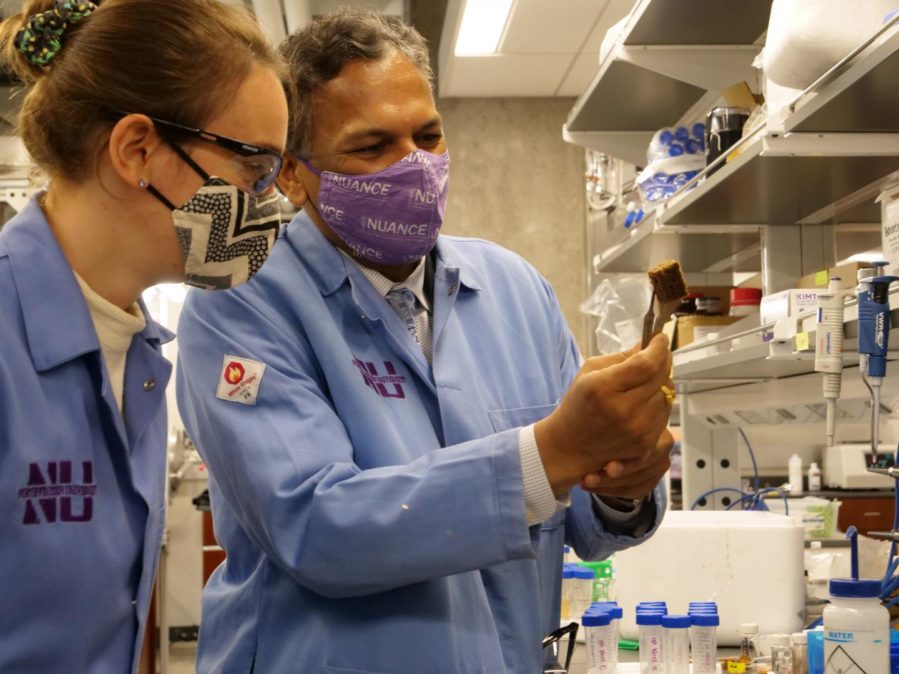
Inspired by Chicago’s many nearby bodies of water, a Northwestern University-led team has developed a way to repeatedly remove and reuse phosphate from polluted waters. The researchers liken the development to a “Swiss Army knife” for pollution remediation as they tailor their membrane to absorb and later release other pollutants.

The research will be published during the week of May 31 in the Proceedings of the National Academy of Science.

Phosphorus underpins both the world’s food system and all life on earth. Every living organism on the planet requires it: phosphorous is in cell membranes, the scaffolding of DNA and in our skeleton. Though other key elements like oxygen and nitrogen can be found in the atmosphere, phosphorous has no analog. The small fraction of usable phosphorous comes from the Earth’s crust, which takes thousands or even millions of years to weather away. And our mines are running out.

A 2021 article in The Atlantic by Julia Rosen cited Isaac Asimov’s 1939 essay, in which the American writer and chemist dubbed phosphorous “life’s bottleneck.”

Given the shortage of this non-renewable natural resource, it is sadly ironic that many of our lakes are suffering from a process known as eutrophication, which occurs when too many nutrients enter a natural water source. As phosphate and other minerals build up, aquatic vegetation and algae become too dense, depleting oxygen from water and ultimately killing aquatic life.

“We used to reuse phosphate a lot more,” said Stephanie Ribet, the paper’s first author. “Now we just pull it out of the ground, use it once and flush it away into water sources after use. So, it’s a pollution problem, a sustainability problem and a circular economy problem.”

Ecologists and engineers traditionally have developed tactics to address the mounting environmental and public health concerns around phosphate by eliminating phosphate from water sources. Only recently has the emphasis shifted away from removing to recovering phosphate.

“One can always do certain things in a laboratory setting,” said Vinayak Dravid, the study’s corresponding author. “But there’s a Venn Diagram when it comes to scaling up, where you need to be able to scale the technology, you want it to be effective and you want it to be affordable. There was nothing in that intersection of the three before, but our sponge seems to be a platform that meets all these criteria.”

Dravid is the Abraham Harris Professor of Materials Science and Engineering at Northwestern’s McCormick School of Engineering, the founding director of the Northwestern University Atomic and Nanoscale Characterization Experimental Center (NUANCE), and director of the Soft and Hybrid Nanotechnology Experimental Resource (SHyNE). Dravid also serves as the director of global initiatives for Northwestern’s International Institute of Nanotechnology. Ribet is a Ph.D. student in Dravid’s lab and the paper’s first author.

The team’s Phosphate Elimination and Recovery Lightweight (PEARL) membrane is a porous, flexible substrate (such as a coated sponge, cloth or fibers) that selectively sequesters up to 99% of phosphate ions from polluted water. Coated with nanostructures that bind to phosphate, the PEARL membrane can be tuned by controlling the pH to either absorb or release nutrients to allow for phosphate recovery and reuse of the membrane for many cycles.

Current methods to remove phosphate are based on complex, lengthy, multi-step methods. Most of them do not also recover the phosphate during removal and ultimately generate a great deal of physical waste. The PEARL membrane provides a simple one-step process to remove phosphate that also efficiently recovers it. It’s also reusable and generates no physical waste.

Using samples from Chicago’s Water Reclamation District, the researchers tested their theory with the added complexity of real water samples.

“We often call this a ‘nanoscale solution to a gigaton problem,'” Dravid said. “In many ways the nanoscale interactions that we study have implications for macrolevel remediation.”

The team has demonstrated that the sponge-based approach is effective on scales, ranging from milligrams to kilograms, suggesting promise in scaling even further.

This research builds on a former development from the same team – Vikas Nandwana, a member of the Dravid group and co-author on the present study was the first author -called the OHM (oleophilic hydrophobic multifunctional) sponge that used the same sponge platform to selectively remove and recover oil resulting from oil contamination in water. By modifying the nanomaterial coating in the membrane, the team plans to next use their “plug-and-play”-like framework to go after heavy metals. Ribet also said multiple pollutants could be addressed at once by applying multiple materials with tailored affinities.

“This water remediation challenge hits so close to home,” Ribet said. “The western basin of Lake Erie is one of the main areas you think of when it comes to eutrophication, and I was inspired by learning more about the water remediation challenges in our Great Lakes neighborhood.”


from ScienceBlog.com https://ift.tt/3yNHNLP

Bird-like robots could assist in medical emergencies and hunt down drones

Bird-like robots could assist in medical emergencies and hunt down drones

A bird flaps its wings, glides using air currents and then smoothly descends to perch on a pole. But this is not just any bird, it’s a robot bird. And robots like these could in the next decade be used to respond to emergencies or to hunt down drones posing a threat to safety or security.

Uncrewed aerial vehicles (UAVs) are set to form a growing multi-billion dollar industry in the skies in the coming years, with rising potential for a wide range of uses from emergency assistance to drug delivery, home deliveries and precision agriculture.

In line with this, efforts are under way to bolster flight efficiency and the intelligence of UAVs to better navigate built environments. A variety of research groups are drawing their inspiration from nature, often birds – an original inspiration for human flight.

Professor Anibal Ollero, an electrical engineer at the University of Seville in Spain, says standard drones with propellers can currently fly for maybe 20 to 30 minutes, but that the bird-like designs he is working on have the potential to at least double this. ‘Conventional multirotors are very constrained in terms of time of flight and range,’ he said. ‘We want to increase this range by using the wind and the airflows.’

The GRIFFIN project he leads is seeking to create prototypes of highly autonomous, ultra-lightweight robot birds that can minimise energy in flight, perch on curved surfaces, carry out tasks with moving limbs and artificial beaks, and intelligently interact with people and the environment.

The birds can also carry integrated on-board computers and cameras for visual navigation. ‘Birds have a very complex body and exhibit complex behaviours. What we are using is the inspiration in the birds to extract relevant features for our robotic ornithopters – aircraft that fly by flapping their wings,’ said Prof. Ollero.

Bird-like

To conserve energy, one of the researchers’ aims is to use the wind to enable the robots to soar like birds, combining that with flapping when needed.

Apart from potentially boosting efficiency, Prof. Ollero says a bird-like design has advantages like the ability to reduce noise and improve safety in certain situations because of the absence of propellers and the use of soft, flexible materials like microfibre composites and nylon for the wings and tail.

This means they could be used, for example, to land on injured people and take biometric measurements or put a mask on them in a hazardous environment. ‘Propellers are not good for this interaction – they can hurt people,’ said Prof. Ollero.

Another application is in so-called ‘contact inspection’ in industrial plants, in areas where it may be dangerous for people to work because of the presence of gases. There, a robot could land on a pipe and measure its thickness to detect corrosion.

So far, the team has demonstrated flight with flapping wings both indoors and outdoors, and the ability to land on a small square platform 20 to 30 centimetres wide. The next challenge, which Prof. Ollero says is ‘not trivial’, is to get the birds to perch on curved surfaces such as poles or cables without overbalancing, and then coordinate other functions.

‘What we want to demonstrate is these combined capabilities: being able to fly while saving energy, being able to perch, and being able to manipulate their limbs like a bird.’

‘What we want to demonstrate is these combined capabilities: being able to fly while saving energy, being able to perch, and being able to manipulate their limbs like a bird.’

Prof. Anibal Ollero, University of Seville, Spain

Challenges

For perching, as well as grasping, the team has been working with materials called shape-memory alloys to create bio-inspired claws that can deform to wrap around a pole – something Prof. Ollero thinks will be possible later this year when combined with machine learning. He also wants to add on-board intelligent sensing of wind to better harness air currents.

Apart from the complexity of coordinating functions, there are some other big challenges to overcome. For one, he says, transitioning between flapping and gliding is difficult, while depending on environmental fluctuations is not always reliable. As lightweight birds with on-board equipment, there are also challenges with the load they can carry – though Prof. Ollero says they had enough capacity to transport things like medicines.

‘There is a lot of work to do on the integration of new technologies related to material science, mechanics, aerodynamics and artificial intelligence in our robotic birds,’ he added. However, he thinks such birds could be performing practical tasks by 2030.

Visual navigation is another challenge for robot birds, something the project HawkEye is investigating. Its studies into how vision guides flight in birds could potentially translate into more efficient guidance systems for UAVs.

Until recently, birds’ in-flight vision had been little studied, says Professor Graham Taylor, a mathematical biologist at the University of Oxford, UK, who leads HawkEye. ‘It’s just very hard to study in-flight. That’s challenging until you’ve got miniaturised kit.’

Miniaturisation

Now, miniaturisation has become possible through developments in mobile phone technology, allowing the creation of non-invasive attachable sensors and markers for measuring birds’ head, eye and body movements with what Prof. Taylor describes as ‘sub-millimetre precision’. As a key part of the project, the researchers are using these miniature cameras and motion capture systems to enable 3D reconstructions of what birds see in flight.

His team has been studying how birds use vision in ‘goal-directed behaviours’ including pursuing prey and manoeuvring around obstacles.

HawkEye has uncovered different strategies. The team found that peregrine falcons (Falco peregrinus) use visual feedback for guidance in a similar way to visually guided missiles, making them highly efficient for chasing prey moving in a smooth, straight line.

In contrast, a later study found that Harris’s hawks (Parabuteo unicinctus) use a ‘mixed guidance’ strategy to pursue prey through ‘cluttered’ habitats such as desert scrub or trees, improving performance for chasing agile, zigzagging targets.

Aside from the potential to apply this knowledge in navigation systems, it could be harnessed to help flying vehicles intercept drones that pose a threat. Though visually guided systems have been developed for missile interception, blocking drones in the more crowded urban airspace of cities and stadiums poses a new challenge, says Prof. Taylor.

This could gain importance given the expected growth in drones, he says, noting the 2018 drone scare at London’s Gatwick airport that closed the runway for 33 hours and was estimated to have cost airlines tens of millions of euros.

‘There is a gap at the moment for anything that’s capable of going in and intercepting something safely. That’s one of the things that birds are extremely good at doing.’

Flights

Having observed more than 20,000 flights of hawks, falcons, finches and pigeons, Prof. Taylor says his team has gained a strong understanding of the underlying mechanisms involved in pursuit and obstacle avoidance, as well as perching.

‘(We now have) a really good understanding of how birds are making use of vision to do that effectively in crowded environments,’ he said. ‘It’s taken biomechanics and the study of flight into the era of big data.’

Prof. Taylor adds that despite complex bird behaviours on the surface, there seemed to be a relatively simple underlying mathematical guidance law that captures most of the behaviours HawkEye has analysed, potentially simplifying the creation of algorithms in UAVs that can then be tweaked for different purposes.

‘It gives us a common framework for understanding a whole range of behaviours that might not initially seem closely connected,’ he said. ‘Now that we understand the algorithms, the next step is to start applying those on drones.’

The algorithms could be applied to studying other complex behaviours in nature, says Prof. Taylor, while better knowledge on birds and their vision can help understand how they evolved to deal with different tasks, and help design structures such as buildings and wind turbines with cues to prevent birds from crashing into them.

Enrico Ajanic, a PhD student in robotics at EPFL (the École Polytechnique Fédérale de Lausanne) in Switzerland, who has been working on raptor-inspired drones with artificial feathers, says the different types of drones have different advantages at present – with multirotors being agile but with comparatively low endurance, while winged drones currently tend to have high endurance but low agility.

‘There are many lessons we can learn from birds,’ he added. ‘They are highly skilled fliers that can negotiate many different flight regimes – fast, soaring, agile and slow flight, to name a few.’

Pigeons

Ajanic said that apart from raptors, researchers can learn a lot from many different bird species. For example, despite their bad reputation, pigeons are also an excellent model for investigation because they can both reliably navigate in cities and fly long distances efficiently, he says.

But he says there are still many challenges, such as the sensitivity of bird-like drones to wind. There are also many questions to answer to improve both the biological understanding of birds and how this can be applied in drones, including how birds twist their tails when gliding and how to optimise the ability of wings to morph.

‘There is still a lot of work to do before we can even approximate the flight abilities of birds,’ added Professor Dario Floreano, director of the EPFL Laboratory of Intelligent Systems and Ajanic’s PhD advisor. ‘Birds do not only fly, but also coordinate with each other, interact and change the environment, and make complex autonomous decisions that our drones can hardly match.’

Yet though he says that drones can generate anxiety and risk of privacy violations, he thinks there are more positive potential impacts than negatives – with bird-inspired UAVs having the opportunity to significantly shape the future of drones.

‘Such future drones will play an important role in aiding humanity in search and rescue missions, disaster mitigation or efficient delivery,’ said Prof. Floreano. ‘To successfully complete those missions, they will have to navigate autonomously in complex environments. Thus, the challenges such drones must overcome are very similar to the challenges birds are tackling every day.’

The research in this article was funded by the EU’s European Research Council.

Originally published in Horizon Magazine


from ScienceBlog.com https://ift.tt/3wKD9ML

Featured Post

Sci Foo heads to Singapore

The Digital Science and O’Reilly teams are getting ready to head to Science Foo Camp, and we’re excited because for the first time the eve...

Popular