Quantum nanodiamonds may help detect disease earlier

Quantum nanodiamonds may help detect disease earlier
The quantum sensing abilities of nanodiamonds can be used to improve the sensitivity of paper-based diagnostic tests, potentially allowing for earlier detection of diseases such as HIV, according to a study led by UCL researchers in the i-sense McKendry group.

Paper-based lateral flow tests work the same way as a pregnancy test in that a strip of paper is soaked in a fluid sample and a change in colour – or fluorescent signal – indicates a positive result and the detection of virus proteins or DNA. They are widely used to detect viruses ranging from HIV to SARS-CoV-2 (lateral flow tests for Covid-19 are currently being piloted across England) and can provide a rapid diagnosis, as the results do not have to be processed in a lab.

The new research, published in Nature, found that low-cost nanodiamonds could be used to signal the presence of an HIV disease marker with a sensitivity many thousands of times greater than the gold nanoparticles widely used in these tests.

This greater sensitivity allows lower viral loads to be detected, meaning the test could pick up lower levels of disease or detect the disease at an earlier stage, which is crucial for reducing transmission risk of infected individuals and for effective treatment of diseases such as HIV.

The research team are working on adapting the new technology to test for COVID-19 and other diseases over the coming months. A key next step is to develop a hand-held device that can “read” the results, as the technique was demonstrated using a microscope in a laboratory. Further clinical evaluation studies are also planned.

Lead author Professor Rachel McKendry, Professor of Biomedical Nanotechnology at UCL and Director of i-sense EPSRC IRC, said: “Our proof-of-concept study shows how quantum technologies can be used to detect ultralow levels of virus in a patient sample, enabling much earlier diagnosis.

“We have focused on the detection of HIV, but our approach is very flexible and can be easily adapted to other diseases and biomarker types. We are working on adapting our approach to COVID-19. We believe that this transformative new technology will benefit patients and protect populations from infectious diseases.”

The researchers made use of the quantum properties of nanodiamonds manufactured with a precise imperfection. This defect in the highly regular structure of a diamond creates what is called a nitrogen-vacancy (NV) centre. NV centres have many potential applications, from fluorescent biomarking for use in ultra-sensitive imaging to information processing qubits in quantum computing.

The NV centres can signal the presence of an antigen or other target molecule by emitting a bright fluorescent light. In the past, fluorescent markers have been limited by background fluorescence, either from the sample or the test strip, making it harder to detect low concentrations of virus proteins or DNA that would indicate a positive test. However, the quantum properties of fluorescent nanodiamonds allow their emission to be selectively modulated, meaning the signal can be fixed at a set frequency using a microwave field and can be efficiently separated from the background fluorescence, addressing this limitation.

The optical results showed up to a five orders of magnitude (100,000 times) improvement in sensitivity compared to gold nanoparticles (that is, a much lower number of nanoparticles were required to generate a detectable signal). With the inclusion of a short 10-minute constant-temperature amplification step, in which copies of the RNA were multiplied, the researchers were able to detect HIV RNA at the level of a single molecule in a model sample.

The work was demonstrated in a laboratory setting but the team hopes to develop the tests so that the results could be read with a smartphone or portable fluorescence reader. This means that the test could, in future, be performed in low-resource settings, making it more accessible to users.

First author Dr Ben Miller (i-sense Postdoctoral Research Associate at the London Centre for Nanotechnology at UCL) said: “Paper-based lateral flow tests with gold nanoparticles do not require laboratory analysis, making them particularly useful in low resource settings and where access to healthcare is limited. They are low cost, portable, and user friendly.

“However, these tests currently lack the sensitivity to detect very low levels of biomarkers. By replacing commonly used gold nanoparticles with fluorescent nanodiamonds in this new design, and selectively modulating their (already bright) emission of light, we have been able to separate their signal from the unwanted background fluorescence of the test strip, dramatically improving sensitivity.”

Professor John Morton, Director of UCL’s Quantum Science and Technology Institute (UCLQ) and a co-author of the paper, said: “This interdisciplinary collaboration between UCLQ and the i-sense team in the LCN is a fantastic illustration of how foundational work on quantum systems, such as NV centre in diamond, can evolve from the lab and play a crucial role in real-world applications in sensing and diagnostics. Researchers at UCLQ are exploring and enabling the impact of these and other quantum technologies by working with industry and other academic research groups.”

The study was carried out by an interdisciplinary team of i-sense researchers from UCL, UCLH, and University of Oxford, led by the London Centre for Nanotechnology at UCL. i-sense is an Interdisciplinary Research Collaboration (IRC) funded by the UK Engineering and Physical Sciences Research Council (EPSRC).

This work was funded by the UK EPSRC, Royal Society, London Centre for Nanotechnology, H2020 European Research Council, the UCLH NHS Foundation Trust and supported by the National Institute for Health Research University College London Hospitals Biomedical Research Centre.


from ScienceBlog.com https://ift.tt/2KG6p4l

Doctors use existing treatment earlier to save the lives of Covid-19 patients

Doctors use existing treatment earlier to save the lives of Covid-19 patients

The lives of patients hospitalised with COVID-19 are being saved by doctors who are using an existing medical treatment at an earlier stage.

Dr Luigi Sedda of Lancaster University analysed the results from the team at Wrightington, Wigan and Leigh Teaching Hospitals NHS Trust (WWL). Their research has now been published in the prestigious medical journal BMJ Respiratory Open.

He said: “We show that Continuous Positive Airway Pressure (CPAP) in the first days of hospitalisation seems to save between 10% to 20% of patients. However it is important to underline that this was a pilot study with a small sample size, although comforting evidence is starting to emerge elsewhere.”

According to NHS England, 96% of people who died with Covid had at least one serious health condition and the majority are over the age of 80.

The team led by Dr Abdul Ashish used the CPAP machines on patients with COVID-19 admitted to the Royal Albert Edward Infirmary in Wigan.

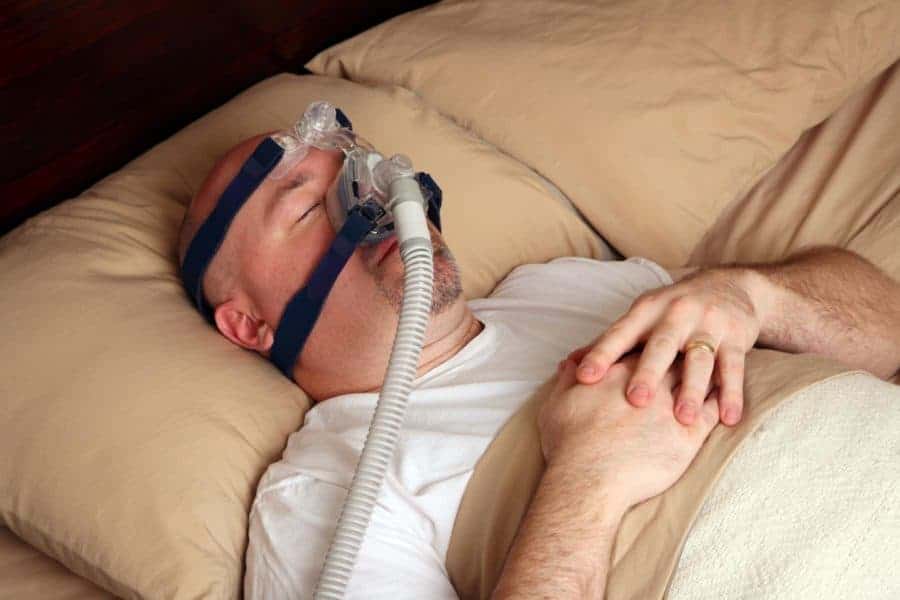
In the case of patients with severe acute respiratory syndrome, COVID-19 may cause the lungs to swell and collapse. Using CPAP treatment, which is often used at home to help people with sleep problems, helps to keep the lungs open and makes breathing easier.

The research conducted by the team showed how CPAP treatment can be delivered effectively in a ward setting, with low resources both across the country and worldwide where intensive care bed availability is limited.

The research has so far helped almost a hundred patients at the Royal Albert Edward Infirmary.

Consultant Respiratory Physician Dr Ashish said: “When you use CPAP early in the admission it stops the patient getting worse, therefore avoiding invasive ventilation techniques. As CPAP is readily available and can be used in a ward setting, we have demonstrated that, when used early, it can be very effective way of treating severe COVID-19 pneumonia.

“We are one of the early adopters of ward based CPAP in the North West and have developed local protocols and pathways by modifying our existing CPAP machines to deliver good outcomes for our patients.”

The researchers also found that the early use of CPAP potentially reduces lung damage during the worst of the COVID-19 infection and allows the patient to recover from the inflammatory effects. However, when used later, CPCP does not prevent lung damage thus leading to additional inflammation and a reduction in survival chances.

Dr Martin Farrier, Associate Medical Director, said: “”We are at the forefront of developing care for COVID-19 patients and have developed a very effective treatment strategy for our population who develop lung failure following COVID-19 infection. The people of Wigan can be sure that they are going to get the best care at WWL because we have helped to develop the best care.”

He praised Dr Luigi Sedda and his team at Lancaster University.

“This collaboration with Lancaster University has been remarkable and allowed us to deliver high quality research.

“The BMJ Respiratory Open is a very significant journal, but more than that, the results of the work are important in terms of our response to COVID-19 and for our organisation. This is the most important publication on the use of CPAP in treating COVID-19 patients and shows a significant association with a fall in mortality. The way that we treat patients here in Wigan has been influential in the way that patients are now treated in other organisations.”


from ScienceBlog.com https://ift.tt/3fIIME0

Specific bacterium in the gut linked to irritable bowel syndrome (IBS)

Specific bacterium in the gut linked to irritable bowel syndrome (IBS)

Researchers at the University of Gothenburg have detected a connection between Brachyspira, a genus of bacteria in the intestines, and IBS — especially the form that causes diarrhea. Although the discovery needs confirmation in larger studies, there is hope that it might lead to new remedies for many people with irritable bowel syndrome.

The pathogenic bacterial genus, Brachyspira, is not usually present in human gut flora. A new study links the bacterium to IBS, particularly the form with diarrhea, and shows that the bacterium hides under the mucus layer protecting the intestinal surface from fecal bacteria.

Attached to intestinal cells

To detect Brachyspira, analyses of fecal samples — which are routinely used for studying the gut flora — were insufficient. Instead, the scientists analyzed bacterial proteins in mucus from biopsies taken from the intestine.

“Unlike most other gut bacteria, Brachyspira is in direct contact with the cells and covers their surface. I was immensely surprised when we kept finding Brachyspira in more and more IBS patients, but not in healthy individuals,” says Karolina Sjöberg Jabbar, who gained her doctorate at Sahlgrenska Academy, University of Gothenburg, and is the first author of the article.

Results inspire hope

Globally, between 5 and 10 percent of the adult population have symptoms compatible with IBS (irritable bowel syndrome). The condition causes abdominal pain and diarrhea, constipation, or alternating bouts of diarrhea and constipation. People with mild forms of IBS can often live a fairly normal life, but if the symptoms are more pronounced it may involve a severe deterioration in quality of life.

“Many questions remain to be answered, but we are hopeful that we might have found a treatable cause of IBS in at least some patients,” says Karolina Sjöberg Jabbar.

Bacterium found in 19 out of 62

The study was based on colonic tissue samples (biopsies) from 62 patients with IBS and 31 healthy volunteers (controls). Nineteen of the 62 IBS patients (31 percent) proved to have Brachyspira in their gut, but the bacterium was not found in any samples from the healthy volunteers. Brachyspira was particularly common in IBS patients with diarrhea.

“The study suggests that the bacterium may be found in about a third of individuals with IBS. We want to see whether this can be confirmed in a larger study, and we’re also going to investigate whether, and how, Brachyspira causes symptoms in IBS. Our findings may open up completely new opportunities for treating and perhaps even curing some IBS patients, especially those who have diarrhea,” says Magnus Simrén, Professor of Gastroenterology at Sahlgrenska Academy, University of Gothenburg, and Senior Consultant at Sahlgrenska University Hospital.

Several possible therapies

In a pilot study that involved treating IBS patients with Brachyspira with antibiotics, the researchers did not succeed in eradicating the bacterium.

“Brachyspira seemed to be taking refuge inside the intestinal goblet cells, which secrete mucus. This appears to be a previously unknown way for bacteria to survive antibiotics, which could hopefully improve our understanding of other infections that are difficult to treat,” Sjöberg Jabbar says.

However, if the association between Brachyspira and IBS symptoms can be confirmed in more extensive studies, other antibiotic regimens, as well as probiotics, may become possible treatments in the future. Since the study shows that patients with the bacterium have a gut inflammation resembling an allergic reaction, allergy medications or dietary changes may be other potential treatment options. The researchers at the University of Gothenburg plan to investigate this in further studies.

“This is another good example of the importance of free, independent basic research that, in cooperation with healthcare, results in unexpected and important discoveries that may be beneficial to many patients. All made without the primary purpose of the study being to look for Brachyspira,” says Professor Gunnar C Hansson, who is a world leading authority in research on the protective mucus layer in the intestines.

The study is published in the journal Gut.


from ScienceBlog.com https://ift.tt/3mqhS60

What’s the secret ingredient that makes a happy couple or family?

What’s the secret ingredient that makes a happy couple or family?

“Happy families are all alike; every unhappy family is unhappy in its own way,” Leo Tolstoy wrote famously in 1878 in the opening lines of Anna Karenina. Turns out the Russian author was onto something.

Cohesive families, indeed, seem to share a few critical traits—psychologists agree. Being emotionally flexible may be one of the most important factors when it comes to longevity and overall health of your romantic and familial relationships.

That’s the finding of a new University of Rochester meta-analysis, published in the Journal of Contextual Behavioral Science, which statistically combined the results of 174 separate studies that had looked at acceptance and commitment therapy, mindfulness, and emotion regulation.

The researchers’ aim was to clarify how mindful flexibility—on one hand—and inattentive, mindless, and rigid inflexibility on the other—were linked to the dynamics within families and romantic relationships.

“Put simply,” says coauthor Ronald Rogge, an associate professor of psychology at the University of Rochester, “this meta-analysis underscores that being mindful and emotionally flexible in tough and challenging situations not only improves the lives of individuals, it might also strengthen and enrich their close relationships.”

Psychological flexibility versus inflexibility

Psychological flexibility is defined as a set of skills that people use when they’re presented with difficult or challenging thoughts, feelings, emotions, or experiences. Such skills encompass:

  • Being open to experiences—both good and bad—and accepting them no matter how challenging or difficult they might be
  • Having a mindful attentive awareness of the present moment throughout day-to-day life
  • Experiencing thoughts and feelings without obsessively clinging to them
  • Maintaining a broader perspective even in the midst of difficult thoughts and feelings
  • Learning to actively maintain contact with our deeper values, no matter how stressful or chaotic each day is
  • Continuing to take steps toward a goal, even in the face of difficult experiences and setbacks

The opposite—psychological inflexibility—describes six specific behaviors, including:

  • Actively avoiding difficult thoughts, feelings, and experiences
  • Going through daily life in a distracted and inattentive manner
  • Getting stuck in difficult thoughts and feelings
  • Seeing difficult thoughts and feelings as a personal reflection and feeling judged or shameful for having them
  • Losing track of deeper priorities within the stress and chaos of day-to-day life
  • Getting derailed easily by setbacks or difficult experiences, resulting in being unable to take steps toward deeper goals.

Psychologists consider the rigid and inflexible responses to difficult or challenging experiences dysfunctional, ultimately contributing to and exacerbating a person’s psychopathology.

How flexibility shapes interactions

Through their analysis, coauthor Jennifer Daks, a PhD candidate in the Rochester Department of Psychology, and Rogge discovered that within families, higher levels of various forms of parental psychological flexibility were linked to:

  • Greater use of adaptive parenting strategies
  • Fewer incidents of lax, harsh, and negative parenting strategies
  • Lower perceived parenting stress or burden
  • Greater family cohesion
  • Lower child distress

Within romantic relationships, higher levels of various forms of psychological inflexibility were linked to:

  • Lower relationship satisfaction for themselves and their partners
  • Lower sexual satisfaction
  • Lower emotional supportiveness
  • Greater negative conflict, physical aggression, attachment anxiety, and attachment avoidance

The results suggest that psychological flexibility and inflexibility may play key roles in both couples and families in shaping how individuals interact with the people closest to them, the two write.

The meta-analysis, also commonly referred to as a “study of studies,” cements and adds to the findings of Rogge’s earlier work in which he and a team tested the effects of couples’ watching movies together and talking about the films afterward. In that work, Rogge and his colleagues demonstrated that couples could bring mindful awareness, compassion, and flexibility back into their relationships by using movies to spark meaningful relationship discussions, leading to both immediate and long-term benefits.

That study, conducted in 2013, found that an inexpensive, fun, and relatively simple watch-and-talk approach can be just as effective as other more intensive therapist-led methods—more than halving the divorce or separation rate from 24 to 11 percent after the first three years of marriage.

“The results suggest that husbands and wives have a pretty good sense of what they might be doing right and wrong in their relationships,” Rogge said about the earlier study. “You might not need to teach them a whole lot of skills to cut the divorce rate. You might just need to get them to think about how they are currently behaving. And for five movies to give us a benefit over three years—that is awesome.”


from ScienceBlog.com https://ift.tt/36cSknB

Are we the same person throughout our lives? In essence, yes

Are we the same person throughout our lives? In essence, yes

A psychobiological study led by the Complutense University of Madrid (UCM) on personal identity and its modification over time in parallel with the changes that individuals experience has shown that the essence of our being remains largely stable over the years.

“In our study, we tried to answer the question of whether we are the same person throughout our lives. In conjunction with the previous literature, our results indicate that there is a component that remains stable while another part is more susceptible to change over time”, explained Miguel Rubianes, a researcher at the Department of Psychobiology and Behavioural Sciences Methodology at the UCM and the Centre for Human Evolution and Behaviour (UCM-ISCIII).

The “continuity of the self” –the capacity for self-awareness and self-recognition– remains stable whereas other components such as physical aspects, physiological processes and even attitudes, beliefs and values are more liable to change.

Even components such as personality traits tend to change slightly over the years, but “the sense of being oneself is preserved, improving our understanding of human nature”, according to Rubianes.

The study, published in Psychophysiology, also determined how long it takes the brain to recognise our own personal identity as distinctive compared to others: around 250 milliseconds.

Potential application in the diagnosis of mental illness

To carry out this study, the brain activity and event-related brain potentials of twenty participants were recorded by electroencephalography (EEG) when presented with stimuli and performing identity and age recognition tasks.

The question of human nature and the basis of the self has been asked since the beginnings of philosophy and has been the subject of research in various disciplines, including anthropology and psychology.

According to the UCM researcher, alterations in the perception of the self may underlie various personality disorders such as bipolar disorder and narcissistic personality, and even other mental illnesses such as schizophrenia and depression.

As regards the applications of these results, “This demonstrates the importance of basic and clinical research alike in the study of the role of personal identity, as this promises to be a much more important concept than was previously thought and may play a fundamental role in psychological assessment and intervention processes”, concluded Rubianes.


from ScienceBlog.com https://ift.tt/2JeXOVI

Forming beliefs in a world of filter bubbles

Forming beliefs in a world of filter bubbles

Why do so many Republicans still believe that the recent US presidential election was fraudulent? Is it possible to reach coronavirus deniers with factual arguments? A study by researchers at the Max Planck Institute for Human Development and the University of Amsterdam provides insights into what it is that stops people from changing their minds. Their findings have been published in the journal Proceedings of the Royal Society of London B.

By talking to other people and observing their behavior, we can learn new things, acquire new skills, and adapt to changing conditions. But what if the information provided by the social environment is inconsistent or contradictory? In a recent study, researchers from the Max Planck Institute for Human Development and the University of Amsterdam have investigated how people deal with information from diverse social sources, and how they use that information to form beliefs. “The internet, in particular, has dramatically changed the structure and dynamics of social interactions. The availablility of social sources is to some extent controlled by algorithms—what we see is biased in favor of our own preferences. At the same time, the internet gives us access to potentially conflicting views,” says lead author Lucas Molleman, associate research scientist in the Center for Adaptive Rationality at the Max Planck Institute for Human Development and postdoc at the University of Amsterdam.

The researchers first conducted an experimental study with 95 participants from the United States. Participants completed an adapted version of the Berlin Estimate AdjuStment Task (BEAST), which reliably measures individuals’ use of social information. They were shown images of groups of animals and asked to estimate the number of animals. They were then shown the estimates of three other participants and asked to make a second estimate. The more participants adjusted their estimates to those of their peers, the more account they had taken of social information.

Across 30 rounds of the task, the researchers varied the conditions of the study, presenting participants with estimates that deviated to a greater or lesser extent from their own estimate, and that were more or less extreme. The results showed that whether participants integrated information from the social environment in their second estimate depended on whether and how strongly their peers’ estimates deviated from each other and from their own estimate. Participants were most likely to adjust their estimates when their peers were in close agreement with each other and their estimates were not too different from the participant’s own. Higher variation in peers’ estimates reduced their impact on the participant’s own judgment. In general, participants gave more weight to their own initial estimate than to their peers’ estimates. Overall, three adjustment strategies were identified: (1) sticking to one’s original estimate, (2) adopting the estimate of one of the three peers, or (3) compromising between one’s original estimate and the peer estimates. The relative frequency of these strategies differed significantly between study conditions. When participants observed a single peer who closely agreed with them, they were more likely to stick to their original estimate or to adopt the estimate of the near peer. When none of the peers were in close agreement with them, participants were more likely to compromise by adjusting their estimate towards, but rarely beyond, that of the nearest peer.

“Our experiment quantifies how people weigh their own prior beliefs and the beliefs of others. In our context, there is actually no reason to assume that one’s own estimate is better than anyone else’s. But what we see here is an effect known in psychology as ‘egocentric discounting’ – namely that people put more weight on their own beliefs than on those of others,” explains co-author Alan Noveas Tump, postdoc at the Center for Adaptive Rationality of the Max Planck Institute for Human Development. “What’s more, our study reveals that this weighting is strongly impacted by the consistency of others’ beliefs with one’s own: people are more likely to heed information that confirms their own beliefs.”

Building on these findings, the researchers developed a model that integrates the observed adjustment strategies and captures that people pay particular attention to social information that confirms their personal judgements. Using simulations, they then investigated how people would behave in real-life situations. For example, they simulated a typical filter bubble, where social information tends to come from like-minded people. They also simulated typical attempts to change people’s minds by confronting them with information inconsistent with their own beliefs. Finally, they investigated how people react to being simultaneously exposed to different groups with extreme beliefs. Their simulations suggest that confirmation effects can lead to divergent social information being ignored, filter bubble effects being exacerbated, and people becoming more extreme in their attitudes.

“Although our study was experimental in design, our model helps explain many contemporary phenomena. It shows how the way people process social information can exacerbate filter bubbles on the internet, and why public debates often become polarized as people quickly become impervious to opposing arguments. As interactions increasingly often take place online, people can often find information that confirms their existing beliefs, making them less willing to listen to alternatives,” says co-author Wouter van den Bos, adjunct research scientist in the Center for Adaptive Rationality at the Max Planck Institute for Human Development and associate professor at the University of Amsterdam.

In future studies, the researchers want to integrate further aspects of reality into the model to find out, for example, whether it matters whether social information comes from a friend, a stranger, an expert, or someone with the same or different political partisanship. They are also investigating how other people influence individuals’ altruistic giving and compliance with social norms.

Original Publication

Molleman, L., Tump, A. N., Gradassi, A., Herzog, S. M., Jayles, B., Kurvers, R. H. J. M., & van den Bos, W. (2020) Strategies for integrating disparate social information. Proceedings of the Royal Society of London B: Biological Sciences. https://ift.tt/369fmvs


from ScienceBlog.com https://ift.tt/3fGbW6w

A Complexity of Life

A Complexity of Life

Scattered across the sea
the fossilised fingerprints
of your invisible touch
proclaim the coincidence
of our lineage.
A single point from which
we all emerged,
negative imprints
flowing into flesh
then bone.
Seeking to make
a connection
we search through
geological albums
for sepia-tinged memories
of when we first met.
Fabricated processes
of distant time and loss
unearth uneasy truths:
no ancestor of complex life,
just the chameleonic breath
of a common imposter.

A Complexity of Life
An example of a molecular fossil (Image Credit: The University of California Museum of Palaeontology).

This poem is inspired by recent research (two studies: here and here), which has found that molecular fossils extracted from 635-million-year-old rocks aren’t the earliest evidence of complex life on Earth but are instead nothing more than common algae.

From the fossil records, scientists are fairly certain that eukaryotic cells (i.e. cells whose DNA is contained within a membrane-bound nucleus, and of which all animals are composed) first emerged around 1.6 billion years ago, evolving from bacteria. However, the same fossil records show that it wasn’t until almost a billion years later that these cells began to form more complex forms of animal life. By tracking how fast the genetic code is evolving, it is estimated that the last common ancestor of all animals evolved around 900-635 million years ago. What makes things complicated in trying to find evidence of the earliest form of complex life is that these organisms had bodies that were made entirely of soft parts, meaning that they only exist as trace fossils, i.e. negative impressions in rock outlining their bodies. Scientists have thus used other methods to identify biological remains, such as looking at ‘molecular fossils’, i.e. molecules that must have been created by a living creature, and which can be linked back to specific groups of organisms.

In 2010, scientists discovered the molecular fossils of an animal steroid in rocks that were once at the bottom of an ancient sea in the Middle East. Sponges are the only known living organisms that can produce this steroid, and since then similar molecular fossils have been found in seas across the world. One thing that has always troubled researchers however, was how could these sponges have been so abundant, yet leave no trace fossils or negative imprints? In this new study, researchers noticed that the molecules previously linked to sponges looked identical to other molecules that had been formed when algae sediments were converted into rock via naturally occurring geological processes. In order to test this theory, researchers from a complementary study took modern algae and simulated these geological conditions in the lab. They found that they were able to produce the exact same molecules that had been thought to come from ancient sponges – thus showing that chemical processes can mimic biology and demonstrating that these types of molecular fossils can no longer be used as a diagnostic marker for early sponges. With these molecular markers being overturned, the next oldest evidence for animals on Earth are the trace fossils of Dickinsonia, a soft-bodied animal which lived in the oceans approximately 558 million years ago.


from ScienceBlog.com https://ift.tt/3fGqRO6

Featured Post

From Vision to Velocity: Architecting a Functional AI Strategy for Medical Affairs

How are organizations architecting functional Artificial Intelligence (AI) strategies that will shape the next phase of AI in Medical Affai...

Popular