TOME launched in 2017 as a five-year pilot project of the Association of American Universities (AAU), Association of Research Libraries (ARL), and Association of University Presses (AUPresses). The goal of the pilot was to explore a new model for sustainable monograph publishing, one in which participating universities commit to providing baseline grants of $15,000 to support the publication of monographs by their faculty, while participating university presses commit to producing digital open access editions of TOME volumes, openly licensing them under Creative Commons licenses, and depositing the files in selected open repositories.
The December meeting gave stakeholders (publishers, librarians, authors, and representatives from a number of societies and foundations) the opportunity to gather—both virtually and in person—and assess the outcomes of the initiative while also deliberating on next steps. In this post I briefly discuss one discrete piece of the assessment: What did we learn from the pilot about eBook usage and the impact of the OA edition on print sales.
Over the course of the pilot, more than 130 scholarly monographs have been published in OA editions with funding from the 20 participating TOME institutions. Given the long lead time associated with monograph publishing, most of the books (over 70%) were released in the final two years of the pilot, which means that any usage data collected by the publishers would be preliminary at best, so the initial analysis focused on the first 25 books, which were published between May 2018 and September 2019. Prior to the December meeting, the publishers of these 25 books were asked to collect usage data from each of the platforms hosting the OA editions. In addition, they provided print sales figures, both for the TOME editions and for comparable titles on their list. The resulting data were compiled into a spreadsheet for analysis.
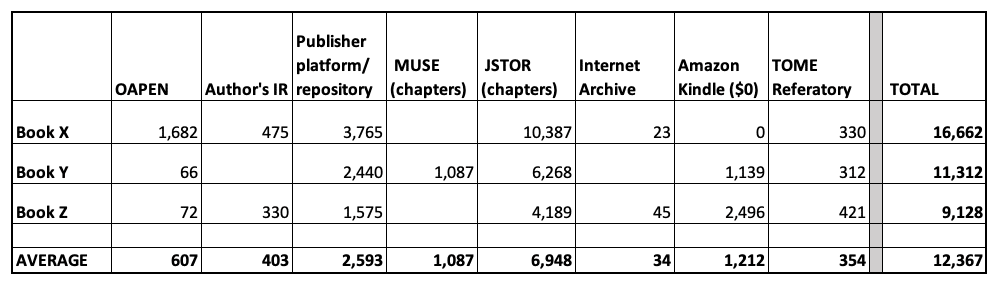
Not surprisingly, the main challenge to analysis of these data was the apples-to-apples problem. Some repositories and platforms collect downloads while others track views only. Some base their stats on single chapters; others on the entire book. Meanwhile, publishers do not all place their OA editions on the same platforms. As a result, the spreadsheet ended up looking a bit like a checkerboard with pieces on some squares but not others. For instance, here’s how a small portion of the spreadsheet looked when the data were filled in:
Figure 1: Sample spreadsheet of downloads/views.
“TOME’s usage stats stand out even more when seen alongside the sales figures for the print editions of the same titles.”
Peter Potter
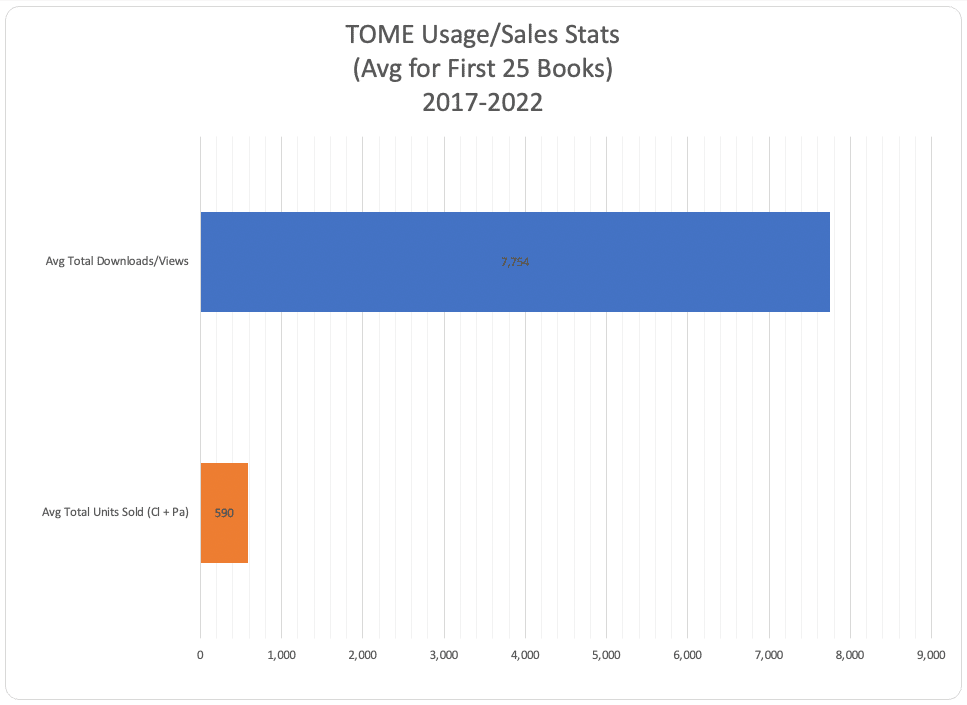
Still, when all the data were collected, one thing was clear: the OA editions have been heavily accessed online. By July 2022, the first 25 TOME books tallied nearly 195,000 downloads and views. The average per book was 7,754.1
These findings are in line with those of other OA book initiatives. In November 2022 MIT Press reported that the 50 books published OA in 2022 through its Direct to Open program were downloaded over 176,000 times.2 This works out to roughly 3,520 per book. Likewise, the University of Michigan Press reported in January 2023 that the 40 Fund to Mission books released OA in 2022 were downloaded over 149,000 times up to the end of December, reaching an average of 3,826 per book.3 While the per book numbers for both D2O and Michigan are lower than that of TOME, the TOME books accumulated their stats over a longer period of time.
TOME’s usage stats stand out even more when seen alongside the sales figures for the print editions of the same titles. As can be seen in this bar chart, the average number of downloads/views per book (7,754) is significantly higher than the average unit sales per book (590).
Figure 2: TOME usage/sales (first 25 books).
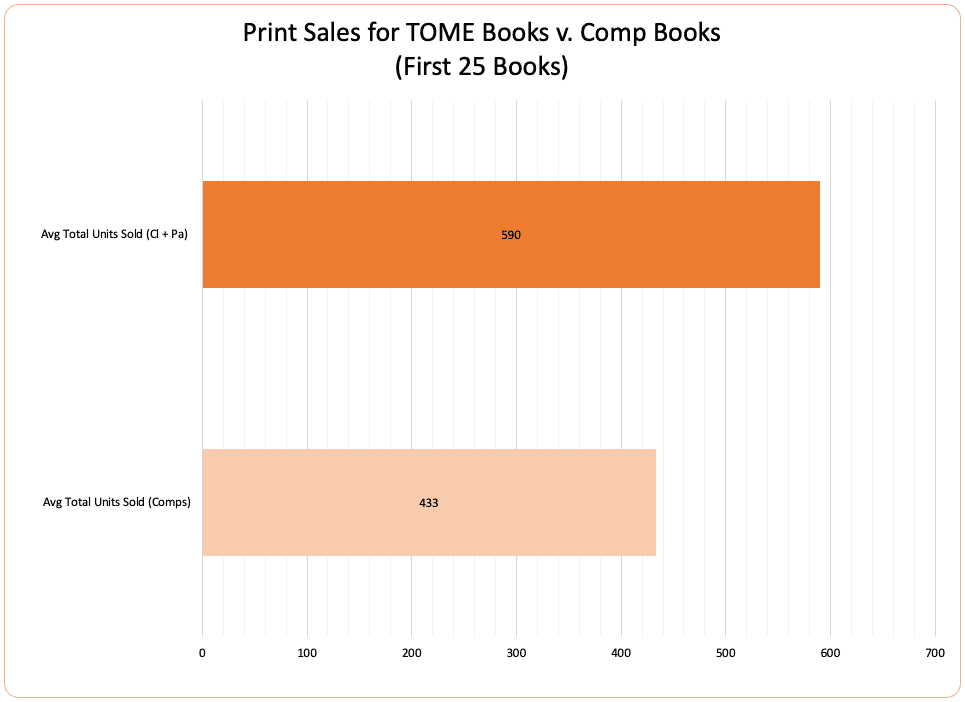
We also considered one of the biggest questions that publishers continue to ask about OA books: How does the OA edition affect sales of the print edition? With this question in mind, publishers provided not just the sales figures for TOME books but sales figures for comparable titles on their list. (Each publisher was left to decide what it deemed a “comparable” book.) As this chart shows, the print editions of TOME books actually outsold their comps.
Figure 3: Print sales: TOME vs. Comps (first 25 books).
“The print editions of TOME books actually outsold their comps.”
Peter Potter
These findings should be taken with a grain of salt. As several publishers pointed out, identifying comps for any single title is mostly guesswork. Furthermore, the sample size (25) is too small to warrant drawing any firm conclusions. For instance, most of the 25 TOME titles had print sales between 300 and 500 copies. Only in four cases did sales exceed 1,000 copies, and if these four titles are excluded from the sample the average drops to a number more consistent with the comps. Understandably, therefore, most presses were reluctant just yet to draw any conclusions about OA’s impact on sales.4
Of course, we know that the impact of scholarly books goes well beyond downloads, views, and sales figures. A future post will look at the Altmetric data for TOME books to see what they tell us about alternative measures of impact. Meanwhile, a final report on TOME, including an in-depth examination of attitudes and motivations of the stakeholder groups, is due to be released in the coming weeks.
Peter joined Virginia Tech’s University Libraries in 2016 after many years in university press publishing. He guides the library’s long-term planning in the area of publishing services, consults with faculty, staff, and students on their publishing needs, and advises prospective authors on all aspects of the scholarly publishing process. During most of the TOME pilot, he served as ARL Visiting Program Officer overseeing the initiative.
Clearly, the agencies involved in Mumbai’s administration can no longer treat this as business-as-usual or an issue that will dissipate on its own as the winter ebbs, as they are most likely to, and wake up only when the smog makes the city invisible next winter
For several years, Mumbaikars believed the coastal city was a cut above New Delhi in the fierce rivalry between the two during winters, given that the national capital was generally enveloped in a smog for days, making visibility low and people’s health precarious as air pollution peaked. Mumbaikars have been forced to drop this snobbishness in the last two months as Mumbai’s air quality has seen depths that we did not think possible. The city has had more days of “poor” and “very poor” Air Quality Index (AQI) through December and January than in any previous winter, according to the data available. On some days, the AQI has been worse than in New Delhi too.The problem needs no more description or testimony; we know it, we are all living it. The question is: What have the agencies responsible to counter the air pollution done about it in the last two-three months? A more basic question, perhaps, is where, with which agency, does the buck stop.
To recap, Mumbai’s AQI has swung between 200 and 400, straddling the categories of poor, very poor, and severe since December 2022. These are alarming and cataclysmic levels of pollution which affect every person across the city, irrespective of class and geographical location. Mumbai, going by the trend of the last few years, usually sees moderate to poor AQI, between 100 to 200, through the winter months thanks largely to the sea breeze which helps lift the load. This has been the first winter in which “the city has seen a seen a prolonged period of poor to very poor AQI in the last six years” since tracking was started six years ago by SAFAR, according to its founder project director Dr Gufran Beig.
The reasons for the rising pollution levels are not clouded. There has been a huge uptick in construction and related activities across Mumbai after a lull during the Covid-19 years of 2020-21. Traffic movement is back to the pre-pandemic levels too, possibly with more vehicles on the roads than at any other time in the city. Land-filling has been relentlessly happening at various locations. Along with all these there is dust from unpaved roads, debris thrown every few metres at the sites of major infrastructure projects across the city, and garbage dump fires, all contributing to the rising air pollution.
There have been natural reasons too; the sea breeze which helped Mumbai has changed, perhaps due to climate change factors. Experts have noted a reduction in coastal wind speeds around the city due in large measure to the abnormal drop in surface temperature in the Pacific Ocean among other locations. Simply put, the change in wind patterns has meant that dust particles — of which there are many more now due to the causes identified above — remain in the air for a longer time.
Clearly, the agencies involved in Mumbai’s administration can no longer treat this as business-as-usual or an issue that will dissipate on its own as the winter ebbs, as they are most likely to, and wake up only when the smog makes the city invisible next winter. The buck stops with the Brihanmumbai Municipal Corporation (BMC) and the Maharashtra Pollution Control Board (MPCB). The time for action is now; in fact, it is late already.
To begin with, it is important to see the alarming air pollution as a complex multi-sectoral issue rather than an isolated one to be addressed by one agency — the most important acknowledgment of such drastically poor levels of AQI should be as a public health emergency or at least a public health hazard. Mumbai’s air has to be made cleaner, first and foremost, for its 20 million residents. It has caused health problems for millions, with general practitioners in practically every area registering a higher number of patients with upper respiratory tract infections.
Poor air quality most impacts all those who work outdoors and spend a large amount of time on streets, such as vendors, drivers, police personnel and so on. It has been a health hazard for months now — and air purifiers or masks cannot be the answer to the problem. At what point will it be declared a public health emergency so that counter-measures can be initiated on a war footing? This is a question that public health professionals in the BMC and the state government must answer — soon.
The BMC is responsible also for the Graded Response Action Plan (GRAP) that has been drawn up for precisely such a time. How and to what extent it was implemented in the last two months remains unclear in the absence of direct communication from the civic body to Mumbaikars. Is this not important? During Covid-19 months in 2020, the BMC had kept a steady stream of information about the spread of the pandemic in every ward, steps taken, location and occupancy of Covid centres and so on. If it could be done then, it can be done again. And air pollution is no less a public health emergency than the pandemic.
In fact, the ward-wise war room approach to tackle that public health emergency, often cited as the Mumbai model, and Mumbai’s municipal commissioner Iqbal Singh Chahal had come in for lavish praise from all over the world. Air pollution, according to the GRAP, too needs to be tackled at micro-area and ward levels. The template exists; Chahal and his team have to resurrect it from two years ago and tweak it to address air pollution instead of the virus spread.
Alongside this, the BMC and MPCB must join forces to regulate construction sites with at least adequate proper green curtains, ban the throwing of debris along infrastructure project sites irrespective of how important that project is, and use water sprinklers regularly across the city to keep the road and traffic dust down. There is some merit in regulating the number of vehicles on the roads, perhaps through the controversial odd-even number plate registration as was done in New Delhi, and commercial vehicles can be off the roads from 8am to 8pm; there must be recognition that the odd-even measure is a Band-aid solution to a bleeding wound but it might work in the short run. If nothing else, the BMC can — and must — start imposing stiff penalties on offenders from infra majors to polluting vehicle owners.
What Mumbai needs is rapid and purposeful action that is not hampered by the multiplicity of agencies; the BMC has to be in command and control. If it could use water sprinklers and regulate construction activities along Marine Drive during the G-20 summit last month, then it can do so across the city too. The ball is in your court, Mr Chahal. And this action should be replicated across the Mumbai metropolitan region.
Smruti Koppikar, journalist and urban chronicler, writes extensively on cities, development, gender, and media. She is the founder editor of ‘Question of Cities.’
(If you have a story in and around Mumbai, you have our ears, be a citizen journalist and send us your story here. )
(To receive our E-paper on WhatsApp daily, please click here. To receive it on Telegram, please click here. We permit sharing of the paper's PDF on WhatsApp and other social media platforms.)
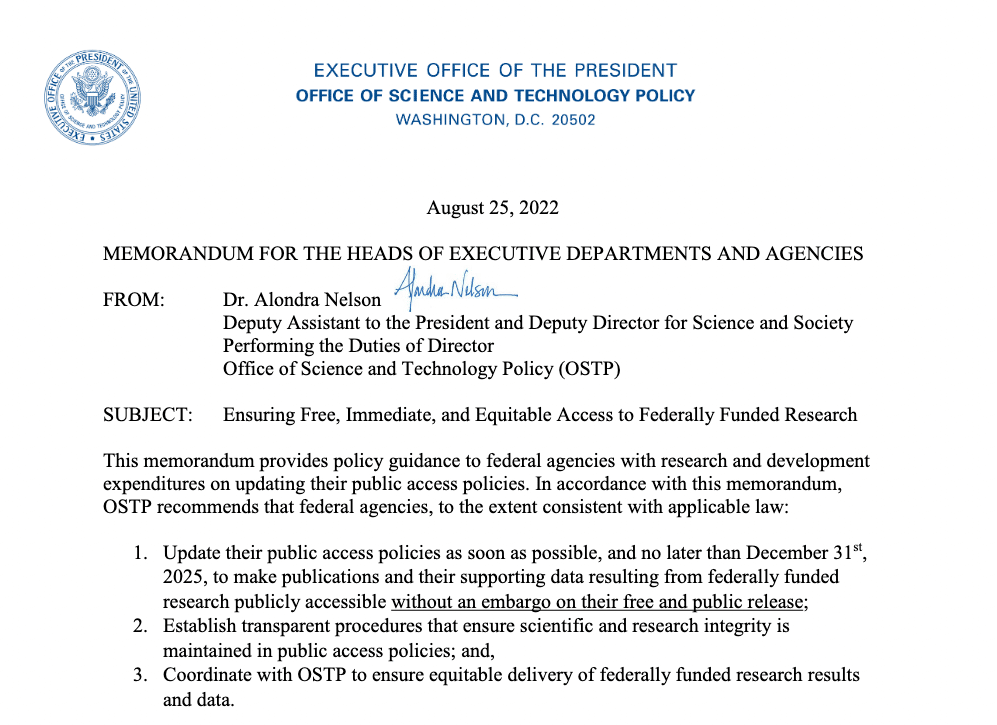
The White House OSTP’s new memo (aka the Nelson Memo) will see this trend advance rapidly in the United States, stipulating that federally-funded publications and associated datasets should be made publicly available without embargo.
In this blog post, Symplectic‘s Kate Byrne and Figshare‘s Andrew Mckenna-Foster start to unpack what the Nelson Memo means, along with some of the impacts, considerations and challenges that research institutions and librarians will need to consider in the coming months.
Demystifying the Nelson Memo’s recommendations
The focus of the memo is upon ensuring free, immediate, and equitable access to federally funded research.
The first clause of the memo is focused on working with the funders to ensure that they have policies in place to provide embargo-free, public access to research.
The second clause encourages the development of transparent procedures to ensure scientific and research integrity is maintained in public access policies. This is a complex and interesting space, which goes beyond the remit of what we would perhaps traditionally think of as ‘Open Access’ to incorporate elements such as transparency of data, conflicts of interest, funding, and reproducibility (the latter of which is of particular interest to our sister company Ripeta, who are dedicated to building trust in science by benchmarking reproducibility in research).
The third clause recommends that federal agencies coordinate with the OSTP in order to ensure equitable delivery of federally-funded research results in data. While the first clause mentions making supporting data available alongside publications, this clause takes a broader stance toward sharing results.
What does this mean for institutions and faculty?
The Nelson memo introduces a clear set of challenges for research institutions, research managers, and librarians, who now need to consider how to put in place internal workflows and guidance that will enable faculty to easily identify eligible research and make it openly available, how to support multiple pathways to open access, and how to best engage and incentivize researchers and faculty.
However, the OSTP has made very clear that this is not in fact a mandate, but rather a non-binding set of recommendations. While this certainly relieves some of the potential immediate pressure and panic around getting systems and processes in place, it is clear that what this move does represent is the direction of travel that has been communicated to federal funders.
Funders will look at the Nelson Memo when reviewing their own policies, and seek alignment when setting their own policy requirements that drive action for faculty members across the US. So while the memo does not in itself mandate compliance for institutions, universities, and research organizations, it will have a direct impact on the activities faculty are being asked to complete – increasing the need for institutions to offer faculty services and support to help them easily comply with their funders requirements.
How have funders responded so far?
We are already seeing clear indications that funders are embracing the recommendations and preparing next steps. Rapidly after the announcement, the NIH published a statement of support for the policy, noting that it has “long championed principles of transparency and accessibility in NIH-funded research and supports this important step by the Biden Administration”, and over the coming months will “work with interagency partners and stakeholders to revise its current Public Access Policy to enable researchers, clinicians, students, and the public to access NIH research results immediately upon publication”.
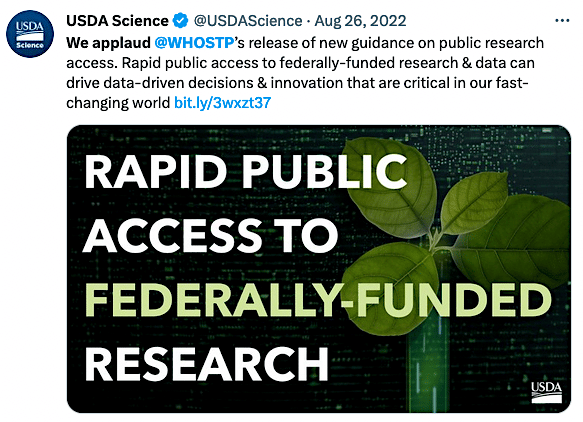
Similarly, the USDA tweeted their support for the guidance, noting that “rapid public access to federally-funded research & data can drive data-driven decisions & innovation that are critical in our fast-changing world.”
How big could the impact be?
While it will take some time for funders to begin to publish their updated OA Policies, there have been some early studies which seek to assess how many publications could potentially fall under such policies.
1.32 million publications in the US were federally funded between 2017-2021, representing 33% of all US research outputs in the same period.
32% of federally funded publications were not openly available to the public in 2021 (compared to 38% of worldwide publications during the same period).
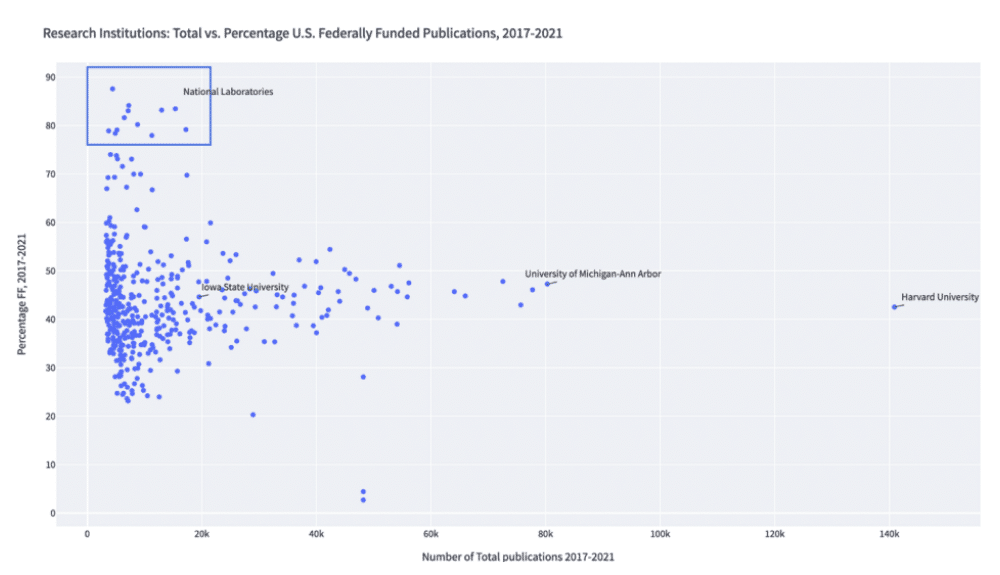
Schares’ study included 237 federal funding agencies – due to the removal of the $100m threshold, many more funders now fall under the Nelson memo than under the previous 2013 Holdren memo. This makes it likely that disciplines who previously were not impacted will now find themselves grappling with public access requirements.
Source: Impact of the 2022 OSTP Memo: A Bibliometric Analysis of U.S. Federally Funded Publications, 2017 2021: https://ostp.lib.iastate.edu
In Schares’ visualization here, where each dot represents a research institution, we can see that two main groupings emerge. The first is a smaller group made up of the National Laboratories. They publish a smaller number of papers overall, but are heavily federally funded (80-90% of their works). The second group is a much larger cluster, representing Universities across the US. Those organisations have 30 – 60% of their publications being federally-funded, but building from a much larger base number of publications – meaning that they will likely have a lot of faculty members who will now need support.
Where do faculty members need support?
Sustainable Development Goals (SDGs) labels on publications
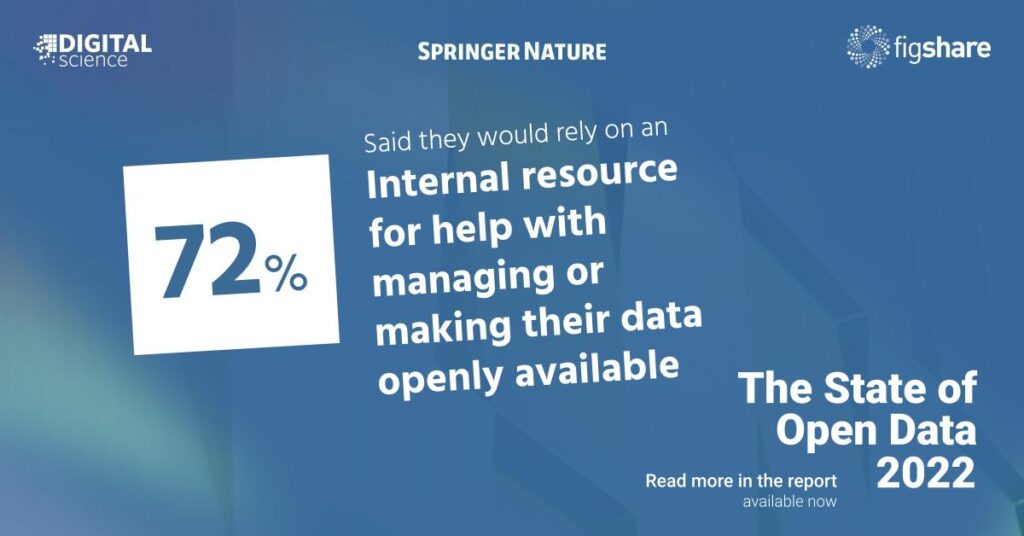
According to the 2022 State of Open Data Report, institutions and libraries have a particularly essential role to play in meeting new top-down initiatives, not only by providing sufficient infrastructure but also support, training and guidance for researchers. It is clear from the findings of the report that the work of compliance is wearing on researchers, with 35% of respondents citing lack of time as reason for not adhering to data management plans and 52% citing finding time to curate data as the area they need the most help and support with. 72% of researchers indicated they would rely on an internal resource (either colleagues, the Library or the Research Office) were they to require help with managing or making their data openly available.
How to start?
Institutions who invest now in building capacity in these areas to support open access and data sharing for researchers will be better prepared for the OSTP’s 2025 deadline, helping to avoid any last-minute scramble to support their researchers in meeting this guidance.
Beginning to think about enabling open access can be a daunting task, particularly for institutions who don’t yet have internal workflows or appropriate infrastructure set up, so we recommend breaking down your approach into more manageable chunks:
1. Understand your own Open Access landscape
Find out where your researchers are publishing and what OA pathways they are currently using. You can do this by reviewing your scholarly publishing patterns and the OA status of those works.
Explore the data you have for your own repositories – not only your own existing data sets, but also those from other sources such as data aggregators or tools like Dimensions.
Begin to overlay publishing data with grants data, to benchmark where you are now and work to identify the kinds of drivers that your researchers are likely to see in the future.
2. Review your system capabilities
Is your repository ready for both publications and data?
Do you have effective monitoring and reporting capabilities that will help you track engagement and identify areas where your community may need more support? Are your systems researcher-friendly; how quickly and easily can a researcher make their work openly available??
3. Consider how you will support your research ecosystem
Identify how you plan to support and incentivize researchers, considering how you will provide guidance about compliant ways of making work openly available, as well as practical support where relevant.
Plan communication points between internal stakeholders (e.g. Research Office, Library, IT) to create a joined-up approach that will provide a shared and seamless experience to your researchers.
Review institutional policies and procedures relating to publishing and open access, considering where you are at present and where you’d like to get to.
How can Digital Science help?
Symplectic Elements was the first commercially available research information management system to be “open access aware”, connecting to institutional digital repositories in order to enable frictionless open access deposit for publications and accompanying datasets. Since 2009 through initial integration with DSpace – later expanding our repository support to Figshare, EPrints, Hyrax, and custom home-grown systems – we have partnered with and guided many research institutions around the globe as they work to evolve and mature their approach to open access. We have deep experience in building out tools and processes which will help universities meet mandates set by national governments or funders, report on fulfilment and compliance, and engage researchers in increasing levels of deposit.
Our sister company Figshare is a leading provider of cloud repository software and has been working for over a decade to make research outputs, of all types, more discoverable and reusable and lower the barriers of access. Meeting and exceeding many of the ‘desirable characteristics’ set out by the OSTP themselves for repositories, Figshare is the repository of choice for over 100 universities and research institutions looking to ensure their researchers are compliant with the rising tide of funder policies.
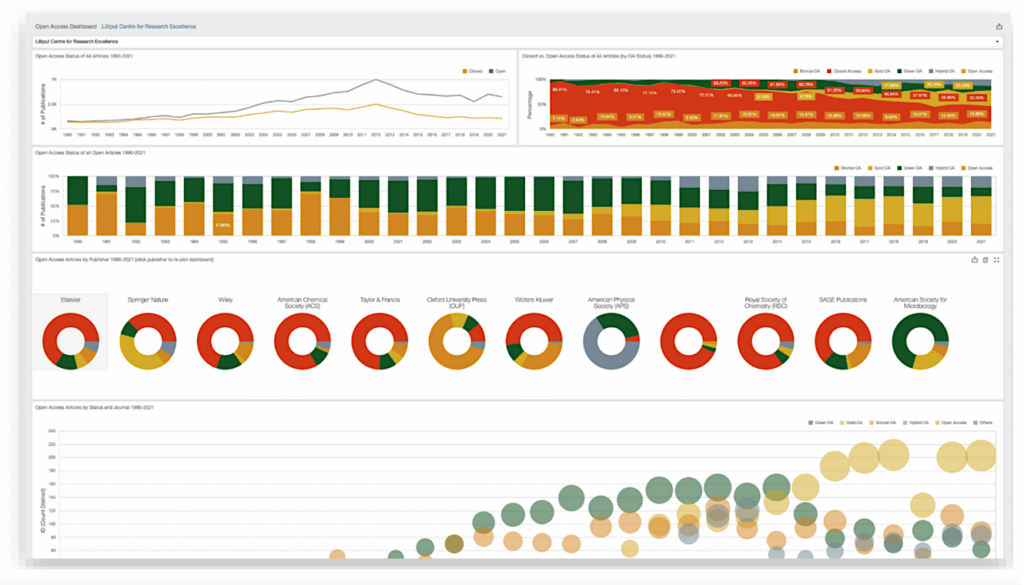
Below is an example of the type of Open Access dashboard that can be configured and run using the various collated and curated scholarly data held within Symplectic Elements.
In this example, we are using Dimensions as a data source, building on data from Unpaywall about the open access status of works within an institution’s Elements system. Using the data visualizations within this dashboard, you can start to look at open access trends over time, such as the different sorts of open access pathways being used, and how that pattern changes when you look across different publishers or different journals, or for different departments within your organization. By gaining this powerful understanding of where you are today, you can begin to think about how to best prioritise your efforts for tomorrow as you continue to mature your approach to open access.
Growing maturity of OA initiatives over time – not a “one and done”.
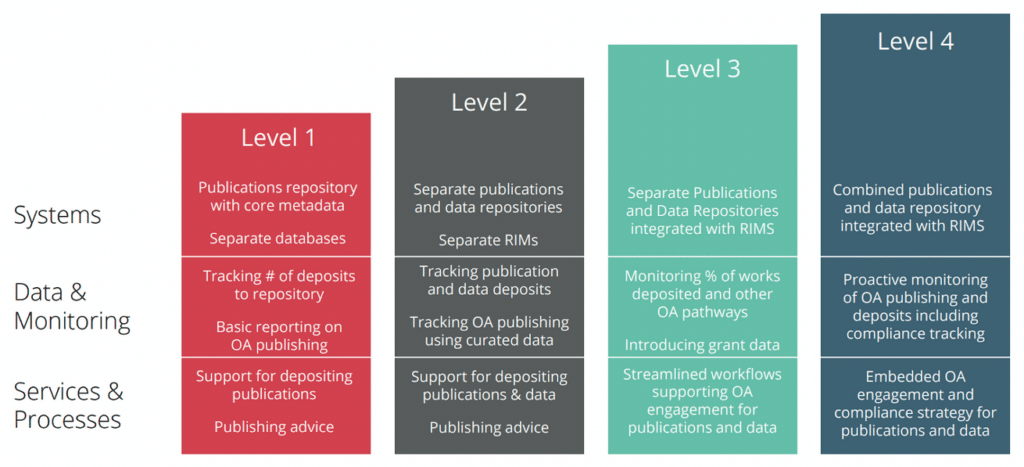
You might find yourself at Level 1 right now where you have a publications repository along with some metadata, and you’re able to track a number of deposits and do some basic reporting, but there are a number of ways that you can build this up over time to create a truly integrated OA solution. By bringing together publications and data repositories and integrating them within a research management solution, you can enter a space where you can monitor proactively, with an embedded engagement and compliance strategy across all publications and data.
For more information or if you’d like to set up time to speak to the Digital Science team about how Symplectic Elements or Figshare for Institutions can support and guide you in your journey to a fully embedded and mature Open Access strategy, please get in touch – we’d love to hear from you.
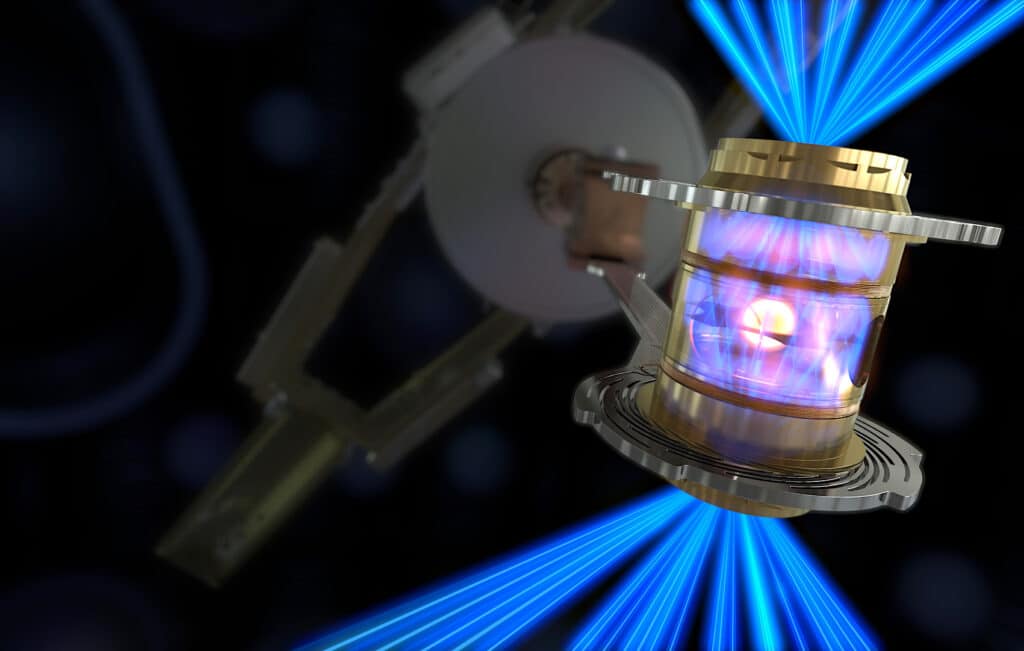
The National Ignition Facility (NIF) has achieved fusion ignition using powerful laser systems and x-rays. Image credit: NIF, Lawrence Livermore National Laboratory, US.
The recent nuclear fusion ignition event at the National Ignition Facility at the Lawrence Livermore National Laboratory in California is a triumph of modern science and of the persistence of scientists who continue to strive to solve some of the most difficult technical and engineering challenges of a generation. However, it is important to see this development in a broader context of global events as well as the research environment that has been created to support the nuclear energy developments upon which society is increasingly likely to depend in the coming years.
Did we vote for this?
It may be argued that geopolitics has been driven by an energy agenda since the late 19th century, when the industrial revolution had moved solidly beyond the borders of the UK and countries began competing for global resources to fuel their burgeoning industrial economies. As our economies have become larger so has our need for energy. Most recent wars (including the one in Ukraine) have been about control of energy resources – oil or gas. As supplies become more scarce or more expensive to extract, tensions will rise. While voters do not vote (in most cases) directly to support a specific energy-based geopolitical stance, in recent years energy has become a more overt topic in elections.
Even in countries where energy independence is a critical geopolitical issue, green parties do not command a large percentage of the vote, nor do mainstream political parties necessarily have well-articulated policies related to energy independence. In Germany, a country with significant foreign energy dependencies (63.7%) that have appeared in the news this year, the Greens garnered 20.5% of the vote in the 2021 federal elections. Meanwhile, in The Netherlands and Belgium next door, countries with even higher percentage dependencies on foreign energy (68.1% and 78% respective) than Germany, green parties have begun to slowly gain ground.
This is perhaps due to the fact that our homes have, until this winter, remained warm at a reasonably affordable cost. However, the phase change that we have all experienced in 2022 (for some very painfully) is a sign of things to come. Indeed, if electorates were to cast their votes more directly based on the growing issues of energy dependence, we might see a significant change in the political landscape in the next few years. Trading blocs like the EU may become more robust in their energy policy – we have already seen the establishment of the EU Energy Platform to start to mitigate the effects of dependency on Russian gas. Being outside such a bloc in current times appears foolish at best.
Enter the apparent saviour of the day, courtesy of a nuclear fusion experiment from the National Ignition Facility (NIF) at Lawrence Livermore National Laboratory in California. Hailed by a number of media outlets as a solution to our energy problems, we need to be careful about being overly optimistic. Anyone who has had an interest in nuclear fusion knows that we have been 30 years away from commercial nuclear fusion for the last 40 years. Indeed, it will come as a surprise to precisely no one who knows me that the seminar I gave in English class 31 years ago as a 14-year-old was on tokamak fusion. I clearly recall stating that nuclear fusion was 30 years away. Which just goes to show – I was wrong!
But, this all sounds a bit dangerous…
Perhaps unsurprisingly, some voters have been worried about the risks of developing nuclear solutions. Harnessing the energy source that, uncontrolled, underlies the most destructive weapons that our species has ever produced, and which powers the Sun, and consequently our entire lives, is an illusive and sometimes perilous pursuit. Classic science fiction novels such as Asimov’s Robot series, and TV shows like the 1980s adaptation of Buck Rogers have shown the post-apocalyptic atomic horrors that paint vivid pictures in our minds of both promises of success and failure with fusion. For many, fusion is not just a technology but a cultural phenomenon. As a technology it looms large in our collective consciousness partly because it is one that has been in development and which holds so much power both for positive and negative outcomes. As a young researcher, it is a beguiling field of study – some of the best minds on the planet, for several generations, have wrestled with taming nuclear fusion.
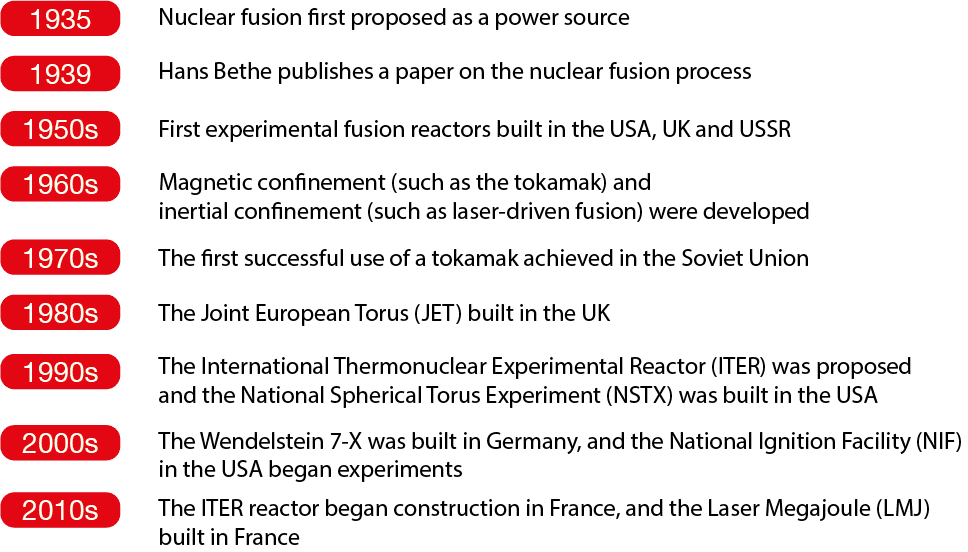
Figure 1: Timeline of the key developments in nuclear fusion research.
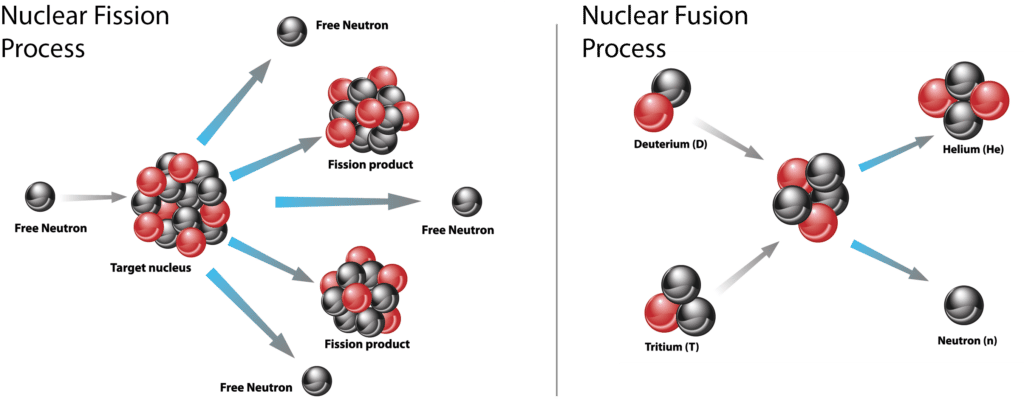
Our knowledge of both forms of nuclear energy – fission and fusion – originate in Einstein’s famous observation that energy and mass are equivalent: E = mc2. In the case of nuclear fission (the process used in current nuclear power plants and in the earliest atomic weapons), heavy elements such as Uranium and Plutonium are used. A heavy element is one in which there are many protons and neutrons in the nucleus of each atom. A configuration of many protons and neutrons (beyond 92 protons) is unstable, which means that the energy required to keep the nucleus together is more than if the atom were to split into two (or more) lighter elements. Just a little interaction with, say, a free neutron is enough to break down the nucleus of some heavy elements into the nuclei of two or more lighter elements. As this process takes place a little energy is given off, which can be converted to heat to turn a turbine. The downside of nuclear fission is that you end up with residual elements that, while more stable than the original atoms in the reaction, are still radioactive and remain so for many years. Such waste products require careful storage in locations where they cannot damage living organisms.
Figure 2: Nuclear Fission versus Nuclear Fusion processes. In the left pane, a heavy element is broken apart via interaction with a neutron into two smaller (but still radioactive) elements and an amount of energy. In the right pane, a deuterium nucleus (a proton and a neutron) and a tritium nucleus (a proton and two neutrons) are brought together to form helium (two protons and two neutrons), a “spare” neutron and energy. In both cases, the right side of each pane is “energetically favourable”, which is to say that the configuration of protons and neutrons on the right of the interaction requires less energy than the configuration on the left, which means that energy is released.
Nuclear fusion, however, is a process that takes place at the other end of the periodic table with very light elements. The energy produced in the fusion reaction is around 5-10x larger than that in a fission reaction. In addition, the by-products are not radioactive – just helium, some neutrons, and energy. In essence, nuclear fusion is a completely clean energy source. Such is the promise of nuclear fusion that some of the best minds in physics have worked on nuclear fusion over the last century. Today, the best minds are also supplemented by AIs, which help to optimise calculations and design the next generation of test reactors.
There are many approaches being developed as a candidate for a commercial nuclear fusion reactor. The main ones include: Magnetic confinement fusion (the type involving ring-style devices – probably the most famous until the recent announcement from NIF), inertial confinement fusion (the type reported on recently); laser-driven fusion; magnetised-target fusion, acoustic inertial confinement fusion, Z-pinch fusion, Muon-catalysed fusion and Nuclear reaction control fusion. Each of these approaches has a different risk profile and different pros and cons, but a successful solution may well need learnings from several of these different technologies.
While the experiment reported recently from the NIF is a significant step in getting to nuclear fusion it is not actually a “break even” event – if you include all the energy used in creating the reaction, you’ll find that the reaction still didn’t get more energy out than was put in. There is still a long way to go but, there may be a value to making something out of this step. Returning science to the public consciousness in a positive way, especially in the face of recent developments in Ukraine and their fallout in the oil industry, may have its benefits. But, it will be important not to overplay the hand – presenting this as fusion being “just around the corner” can backfire badly.
OK, so when will we have it?
Given the increasing importance of this technology to the future of humanity, one would expect to see a significant amount of research funding going into the various different routes to fusion. And while the amount is substantial it is, perhaps, less than might be expected.
Global competitive grant funding for fusion research is at the level of around USD $800 million per year. Put another way, the US spends around USD $45 billion per year on the total budget of the National Institutes of Health (NIH) and the world spends around USD $32 billion annually on Sustainable Development Goal-related competitive research grants.
I contend neither that health research is not critical, nor that SDG-related research is not an excellent way to spend public money. However one may expect that an effectively limitless, clean energy source that would reduce global dependency on fossil fuels, make a considerable contribution not only to the reduction in greenhouse gases and the cost of living, but which would also reduce global geopolitical tensions, might warrant more than 1.5% of the annual funding spent on these other worthy and critical initiatives.
I don’t want to address issues of lobbying in this piece as the point is well known, rather I want to finish by exploring two points that are closer to research. Firstly, the observation that metrics are powerful drivers of behaviour and, secondly, that links to immediacy seem to be critical in decision making.
Over the last few years, the global nuclear fusion community has consistently produced around 4,000-5,000 research papers per year. However, over the same period the biomedical research community has produced between 800k and 1.25m papers per year; SDG communities have published between 400k and 1m articles per year. A naive argument would be that fusion papers look expensive relative to the more recent papers in either SDG-related research or biomedicine. But, while it is objectively clear that these areas of research are not comparable in their nature, the incentives in the research world are very much skewed toward paper production, which will tend to disadvantage nuclear fusion research. Of course, papers are only one measure of research output. The recent announcement with which I started this blog is a very tangible output of research and its media coverage is positive, but such events are few and far between and hence don’t easily play into a higher speed research narrative.
At a more fundamental level, immediacy plays a critical role in this discussion. It took the better part of 20 years to build momentum for research and funding of SDG-related research, but similar levels of research output and funding were achieved for COVID research in just 24 months. The threat of not understanding the SDGs is not immediately evident in the lives of those with established advanced economies or large continental territories that are not so directly at risk from rising water levels or energy challenges – it has not been a burning platform for them. While the threat of COVID is not as existential or as long-lived for humanity as either SDGs or the emerging energy crisis, the immediacy of the issue in the G20 made the topic instantly appealing both for funding and for publication.
At its heart, nuclear fusion suffers from a perception problem – it is always 30 years away. Because we don’t associate everyday challenges such as energy prices, war, and economic stagnation with not having nuclear fusion as one of our power options, we don’t make research decisions or political choices based on funding and solving this problem. We need a long-term alignment across the political spectrum that strives for nuclear fusion with consistent funding and clear strategic intent to gain this.
If the NIF announcement leads to a broad realisation that we are getting closer and that voters and hence politicians will take note of the seriousness of our situation, then perhaps another 30 years will not be needed.
Funding levels and publication counts in this article are sourced fromDimensions.
Daniel Hook is CEO of Digital Science, co-founder of Symplectic, a research information management provider, and of the Research on Research Institute (RoRI). A theoretical physicist by training, he continues to do research in his spare time, with visiting positions at Imperial College London and Washington University in St Louis.
In seeking to define morality and moral actions, the Catechism of the Catholic Church states in paragraph 1753 that, “A good intention (for example, that of helping one’s neighbor) does not make behaviour that is intrinsically disordered, such as lying and calumny, good or just. The end does not justify the means.”
It is tempting to think of science in the abstract as objective and pure based on rigorous analysis of empirical evidence. Conversely, politics might often appear less structured and more chaotic, based on subjective values and driven by interest groups and compromises. However, both are human endeavours – neither science nor politics functions solely in the abstract. Both are influenced by biases that are often not evident or transparent to the external observer. The scientific method is one mechanism of checks and balances used to curtail undue, inappropriate, or political influence on science.
The scientific method teaches researchers to be sceptical and revolves around the performance of rigorous experiments, the collection of data, and the unbiased presentation of results in a format with sufficient explanation and transparency that peers may review, question and reproduce the results. In contrast to the platonic ideal of the scientific method, scientific enterprise in practice is more complex and nuanced. It involves many scientists with complex relationships and drivers, research institutions with needs, funding agencies with stakeholders, and publishers with shareholders. All operate according to their incentives and values. And they compete for support and funding within a society shaped by a complex, dynamic, and multi-stakeholder landscape.
Politics also operates in what often seems like a detached or parallel universe in which decisions are reached via a mix of scientific and economic evidence, the needs of the general population, and sometimes by influential interested individuals, groups, and companies.
In reality, science and politics have always been intimately connected, and neither works in practice as they do in theory. Science is political, and although politicians and lobbyists may not use the scientific method, they use science. Science may be used politically but what is crucial is to ensure that politics and subjectivity do not interfere with the scientific method.
Peer review is a check within the framework of scientific communication, but it is not the check. It is, however, the one salient to this story.
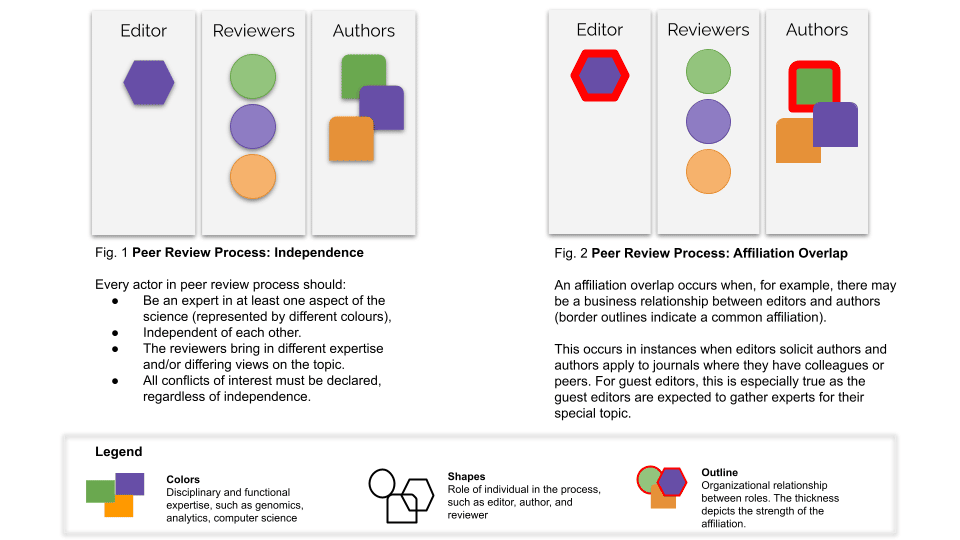
Existing since the 1700s, peer review provides an opportunity to validate scientific research. Growing to an accepted norm about 50 years ago, peer review ideally operates by having knowledgeable, independent experts review scientific research. Most people reading this article understand the broad workings of peer review. The peer reviewers should be independent of each other and experts in a topic covered in the paper (Fig. 1). The reviewers offer insight into the quality of the subject and the strength of the methods. In theory, all actors should be independent of one another, but in practice, this is rarely the case. ‘Peers’ means there should be some overlap among people and their knowledge – the people taking on the review must have the capacity and capability to form a thoughtful critique of a given piece of work. To that end, the editors, peer reviewers, and authors are often part of the same scientific society or even organisation (Fig. 2).
Because the peer review process can vary and has not been standardised, the difference between optimising and manipulating the process may not be clear. The first is a grey area of knowing how the system works and fine-tuning the approach for professional gains. The latter refers to understanding how the system works and stepping over community boundaries of acceptable practices. The Committee on Publication Ethics (COPE) offers guidance on peer review. In contrast, the International Committee on Medical Journals Ethics (ICMJE) clearly states: “Reviewers should declare their relationships and activities that might bias their evaluation of a manuscript and recuse themselves from the peer-review process if a conflict exists.”
See what you think in the following actual case.
Manipulation of Peer Review or Research as Usual?
We take a controversial 2022 research publication as our subject in this case study. However, the nature of the research is not critical to our discussion but rather the scholarly communications process and its integrity – specifically the character of the peer review process. We abstract crucial elements of this case and highlight the most salient and relevant issues. We look at this case without revealing the topic area, as this can be a distraction to the point at hand.
We identified the current case not via a specific literature search (i.e., a topic-based approach) but rather by studying variances in trust marker signatures (e.g., hypothesis, conflict of interest, funding statements) across a range of literature, being blind to the subject area. This paper fell outside a specified range of norms for several trust markers. For example, the study purpose did not use the drier language typical for research in this area which, combined with the lack of a funding statement, raised an initial suspicion.
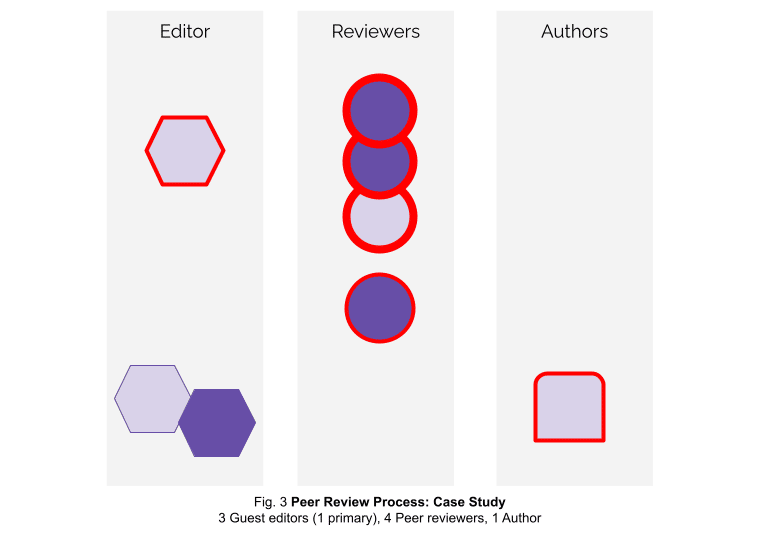
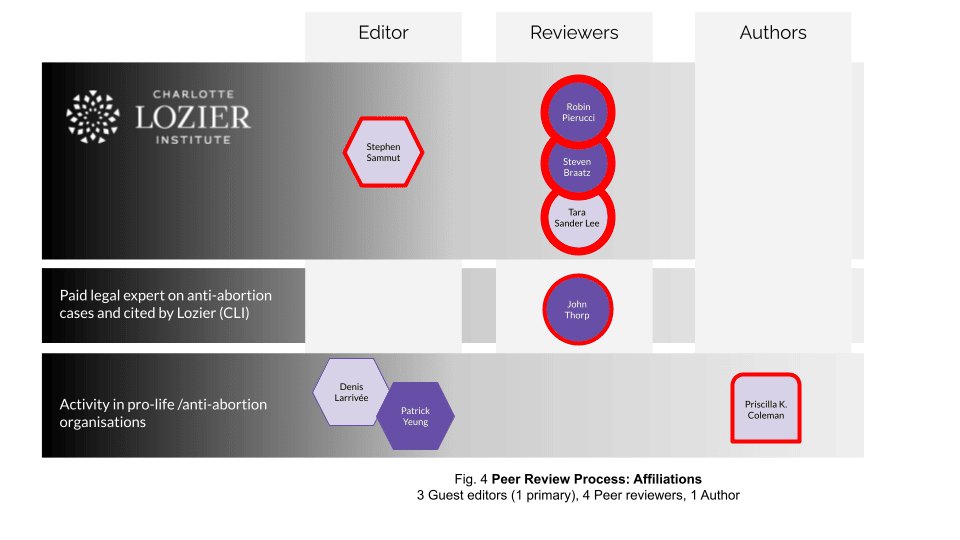
Our chosen case involves three guest editors, four peer reviewers, and a single author, all of whom appear to be closely affiliated either in the community or through their professional affiliations. Three peer reviewers work directly for a single private organisation (“Organisation X”). One of the guest editors, the fourth peer reviewer, and the author are all affiliated with Organisation X. However, only one of the peer reviewers listed an affiliation with Organisation X. The other two guest editors are closely aligned with the principles of organisation X but are leaders in similar organisations. Only one of the peer reviewers originated from a traditional academic research institution. The other peer reviewers did not have affiliations with traditional research institutions. Nuances of peer review are described elsewhere.
Generally, we expect reviewers to have varying and overlapping knowledge and training in related fields for proper peer review. For example, having a topic expert and a statistician in economics would overlap fields with different areas of expertise. Additionally, we expect to see a balance of knowledge and affiliations across editors, peer reviewers, and the author. Affiliations may overlap in narrow fields with small or cutting-edge communities, but the case in question is not a narrow field. Aligned interests raised a flag, though.
In summary, the expertise of guest editors, peer reviewers and the author appears to overlap, as do their perspectives, affiliations, and alignment of interests. (Fig. 3).
Objectively and without specific context, many questions come to mind: When would these overlaps be acceptable while maintaining a robust commitment to research integrity? What other information do you need to know to make that decision? Will the peer reviewers be able to critically and independently evaluate the science within the paper?
Figure 3: Peer Review Process: Case Study.
The Case: When are commonly held interests too overlapping for peer reviewers?
The case mentioned above is the recently published (and now retracted) paper in Frontiers in Psychology, “The Turnaway Study: A Case of Self-Correction in Science Upended by Political Motivation and Unvetted Findings” (Coleman, 2022). This paper sought to criticise The Turnaway Study, a landmark study describing “the mental health, physical health, and socioeconomic consequences of receiving an abortion compared to carrying an unwanted pregnancy to term”. The article came to our attention through algorithms where trust markers appear irregular. This alert suggested we search social media and PubPeer, where a corroborating signal was found. In addition, the signal indicated we should look closer at the trust markers within the article to ensure due diligence of scientific processes was followed. Because Frontiers published the names of reviewers and their declared affiliations, this transparency allows researchers to review their associations in the context of the peer review process and assess the potential for insularity.
Affiliation with Potential for Conflict of Interest
Cited by CLI*
Stephen Sammut
Guest Editor
Franciscan University of Steubenville
Charlotte Lozier Institute, Former member WECARE**
1
Patrick P Yeung
Guest Editor
Saint Louis University
St Louis Guild of the Catholic Medical Association
–
Denis Larrivee
Guest Editor
Loyola University Chicago
International Association of Catholic Bioethics
–
Robin Pierucci
Reviewer
Homer Stryker MD School of Medicine, Western Michigan University
Charlotte Lozier Institute
7
Steven Braatz
Reviewer
American Association of ProLife ObGyns
Charlotte Lozier Institute
4
Tara Sander Lee
Reviewer
Charlotte Lozier Institute
Charlotte Lozier Institute
8
John Thorp
Reviewer
Carolina Asia Center, University of North Carolina at Chapel Hill
Crisis Pregnancy Center Director
7
Priscilla K. Coleman
Author
Human Development and Family Studies, Bowling Green State University
Former Director, WECARE**
4
*Cited by CLI means the author wrote or was cited in blog posts or other writings published by the Charlotte Lozier Institute. Note that being cited by CLI does not indicate an endorsement from the person being cited.
**World Expert Consortium for Abortion Research and Education (WECARE).
Figure 3: Peer Review Process: Affiliations.
CLI presented an amicus brief (an expert opinion) to the US Supreme Court on 29th July 2021 in support of overturning the court’s earlier decision to uphold the outcome of Roe vs Wade, which had asserted for the past 50 years that women in the United States have a constitutional right to an abortion. Moreover, one of the peer reviewers for the Coleman article, Robin Perrucci, MD, an associate scholar at CLI, filed a separate amicus brief on 20th July 2020 with the Life Legal Defense Foundation in the Dobbs v. Jackson Health US Supreme Court case. Priscilla K. Coleman directed the World Expert Consortium for Abortion Research and Education (WECARE), where Stephen Sammut was among ten other members. John Thorp’s legal testimonies on abortion have previously come into question, and he has been the medical director of an anti-abortion crisis pregnancy centre for over 40 years.
Giving Air to Unethical Practices
We are passing no comment on the area of research involved here since this is a highly emotive area for many. However, this peer review process is of clear interest in research conduct and integrity viewed independently of the underlying research. Furthermore, our simple example highlights the potential for institutes, peer reviewers, or authors to translate aligned political interests into scientific influence.
A decision-making majority of editors and peer reviewers are members or affiliates of organisations with publicly stated aligned interests; this process does not meet the standard of the independent, unbiased scientific method.
Allowing this paper to be published in the scholarly record provides a sense of unwarranted legitimacy to the arguments. We hope that publishers will learn from this experience and take action.
For those responsible for the paper, including its undeclared conflicts of interest, the end goal of having a ‘peer-reviewed’ article does not justify the means used to get there.
Dr McIntosh is founder and CEO of Ripeta, a company formed to improve scientific research quality and reproducibility. Part of Digital Science, Ripeta leads efforts in automating quality checks of research manuscripts. Academic turned entrepreneur, Dr McIntosh served as the executive director for the Research Data Alliance (RDA) – US region and as the Director of the Center for Biomedical Informatics at Washington University School in St. Louis. Over the past years, she has dedicated her work to improving science.
While Japan has weathered the COVID-19 storm better than most, new data shows Japan’s infectious diseases research effort has been lagging behind for years, drawing criticism from the country’s researchers.
“We are standing on the brink of a global crisis in infectious diseases. No country is safe from them. No country can any longer afford to ignore their threat.”
Dr Hiroshi Nakajima (1928–2013) Former Director-General of WHO (1996)
These prophetic words from the late Dr Hiroshi Nakajima headlined the release of the World Health Organization’s World Health Report 1996, warning of “fatal complacency among the international community” and urging preventative action in the face of impending crises for the globe. Just one generation later, all nations globally have been subjected to a one-in-100-year pandemic that has so far killed more than 6.6 million people and infected more than 650 million.
One wonders what Dr Nakajima would say of his home country, Japan, which has fared better during the COVID-19 pandemic compared with most nations, with 52,000 dead among more than 26 million cases (source: Johns Hopkins University). But new data and the voices of key researchers suggest Japan has been ignoring Dr Nakajima’s warning – and the threat – for too long, by not investing enough in infectious diseases research, despite Japan’s economic status and various strengths in research and innovation.
This exclusive analysis – using data from the Dimensions database of 130 million publications and journals included in the Nature Index – builds a picture of how infectious diseases research in Japan has stalled over the last few decades, and in particular in the years leading up to and including the start of the pandemic. It’s data that comes as no surprise to some of Japan’s leading researchers in the field.
“Cancer is king”
Concerns about the level of Japanese government funding for infectious diseases research have been held by scientists in Japan’s top universities, hospitals and research centres for years.
“Cancer is king, and the genome is queen. Infectious disease is just a pathogen,” quips Professor Makoto Suematsu, Dean of the School of Medicine at Keio University, one of Japan’s research hospital universities. Professor Suematsu, who is keenly interested in biology and public health, describes funding in Japan for infectious diseases research as being “very weak” and “very minor”, the majority of which goes to the government-controlled National Institute of Infectious Diseases (NIID) – with not enough to share around.
Exactly why “cancer is king” is a matter of demography. “The Japanese are suffering from an ageing population, so the budget has increased for taking care of old people. The budget for the elderly is huge – imagine it is a watermelon and one seed is the budget for infectious diseases research. But it [ageing] is a big problem – two-thirds of the Japanese population will be over 60 in 2040,” Professor Suematsu says.
He says funding is also hampered by regulations within Japan and a lack of private investment: “Unlike in the UK, there is no Wellcome Trust or similar bodies.
“Only prestigious institutions get funding from the government, so Tokyo University for example gets lots of funding. Keio and other private universities get limited government support so it’s quite tough for staff supporting COVID research.”
His comments are echoed by Dr Norio Ohmagari, Director of Disease Control and Prevention at Japan’s National Center for Global Health and Medicine (NCGM). He also is not surprised to learn that the data shows Japan lagging behind on infectious diseases research.
“There is little interest in infectious diseases in Japanese medical research,” says Dr Ohmagari, who is also Head of the WHO Collaborating Centre for Prevention, Preparedness and Response to Emerging Infectious Diseases.
“I have been an independent infectious disease physician for 18 years now. During this time, however, infectious disease research has been at a low ebb. The development of new drugs has gradually declined in activity.”
Dr Ohmagari confirms that the ageing population’s health is taking priority: “There is a high level of interest in regenerative medicine, genome medicine, cardiovascular disease, which has a large number of patients, lipid disorders and diabetes mellitus.”
Among the indicators of low research activity in the field, Dr Ohmagari points to a lack of collaboration between Japanese infectious disease researchers and colleagues internationally.
“I have the impression that there are not many researchers actively collaborating with foreign countries, perhaps because there are not many researchers in infectious diseases to begin with. Personally, I am conducting research in Vietnam, and I have exchanges and joint clinical trials with researchers in Europe and the United States,” he says.
Face masks on sale in Japan.
Professor Masanori Fukushima raises a further issue: the pandemic could have enabled Japanese researchers to better understand the impact on patients, but due to a lack of access to patients at research hospitals this hasn’t been possible on a large scale.
“COVID-19 patients are not concentrated in university hospitals with research capabilities, and the annual number of COVID-19 patients at university hospitals itself is small,” says Professor Fukushima, Representative Director of the Learning Health Society Institute (LHSI) and Professor Emeritus at Kyoto University.
“Patients admitted to university hospitals are referred from other hospitals, seriously ill, and typically emergency cases, making it difficult for university hospitals to establish a system for continuous research on them.
“COVID-19 patients admitted to university hospitals are not treated by specialists in infectious diseases but by specialists in respiratory medicine and cardiology, as respiratory management is the primary treatment for these patients. In addition, hematologists will be in charge of treating patients with thrombosis; COVID-19 is out of the scope of the study due to their expertise (respiratory medicine, cardiology, and hematology).”
Professor Fukushima says that according to the Ministry for Health and Welfare’s policy, patient samples and other data have been concentrated at the NIID, which is under the direct control of the Ministry. “This makes it difficult for university hospitals with research capabilities to plan and develop virological studies,” he says.
He also says that expert advice has also not always been followed. In spring 2021, Professor Fukushima published a paper (Asking about measures to combat the novel coronavirus – Clinical recommendations: COVID-19 control – Critical appraisal and proposals; Rinsho Hyoka (Clinical Evaluation), May 2021) in which he proposed that all strategic and practical measures against COVID-19 in Japan be left to medical associations and university hospitals, and that specialized hospitals be created or designated and patients concentrated there. “Together with Dr Yokokura, the former president of the Japan Medical Association, I submitted the report to the government, the heads of local governments, and the media, but there has been little response so far,” he says.
“Japan used to be at the forefront of vaccination”
Despite these concerns about the lack of support for infectious diseases research, some scientists are quick to point out that Japan has fared relatively well during the pandemic compared with many nations, and in some ways has handled it better.
Professor Suematsu says: “Despite the size of the limited budget, researchers have very actively investigated infectious diseases. Data sharing has been good with COVID, but it should have been much better with infectious diseases.”
One leading researcher who was actively involved in the effort to prevent the spread of COVID-19 in Japan is ProfessorHiroaki Kitano, President & CEO of Sony Computer Science Laboratories, Inc. and Professor at Okinawa Institute of Science and Technology Graduate School (OIST), who was contacted by the Japanese government to work with the Office for Promotion of Countermeasures against Novel Coronavirus Infections.
Professor Kitano assembled a team of researchers including Dr Makoto Tsubokura of RIKEN who carried out a series of hi-tech simulations to better understand and predict the impact of the contagion on Japanese people within real-world environments, including some important work on the spread of the virus in indoor environments, such as restaurants and bars, and on trains. He has also been involved in international collaborations to produce a global “COVID-19 Disease Map”. See below: Research critical to Japan’s success.
But even Professor Kitano says Japan’s lack of infectious diseases research had impacted on the country’s ability to respond to the COVID-19 pandemic. “We’ve failed to create any effective vaccine so far,” he says. “We haven’t got a domestically developed vaccine approved yet – even now.
“Japan used to be at the forefront of vaccination; we had a very strong vaccination program, and very strong companies that would create vaccinations. Many companies have actually withdrawn from the vaccine business, so that has substantially reduced the capability for manufacturing and quick response. At the same time, the research funding for infectious diseases has not been that abundant.”
Professor Kitano’s assessment was that it could take up to three years before Japan has its own approved and manufactured COVID-19 vaccine. On that front, he says: “The game is pretty much over, unless vaccines desired for the next stage of infection control – such as nasal vaccines potentially more effective for infection prevention – are to be developed.”
Nevertheless, Professor Kitano praised the Japanese government for its handling of vaccine contracts with the major pharmaceutical companies, and for its leadership in appointing Mr Taro Kono as a Minister in charge of vaccinations. “I think the end result is that their actions saved many people’s lives – I’m sure of that,” he says.
Japan falls behind – what the data shows
In early 2022, data from Nature Index and Dimensions started to point to a disparity in Japan’s reputation as one of the world’s leaders in research, with the amount of research focusing on infectious diseases surprisingly low compared to other leading nations. Furthermore, it was dramatically lower in the case of COVID-19.
But Japan itself is highly regarded for its research, so how did this occur?
Stung by criticism of the lack of research funds by high-profile researchers such as 2012 Nobel Prize winner Shinya Yamanaka – and perhaps cognisant of league tables that show Japan slipping behind arch-rivals South Korea and China in publications – the Japanese Ministry of Education, Culture, Sports, Science and Technology (MEXT) announced a major overhaul of research funding in 2017, followed up in 2020 with the establishment of a ¥4.5 trillion (US$43 billion) fund for research. However, researchers such as Yamanaka have pointed out that funding allocation can be mixed, with some areas losing out over other hot topics.
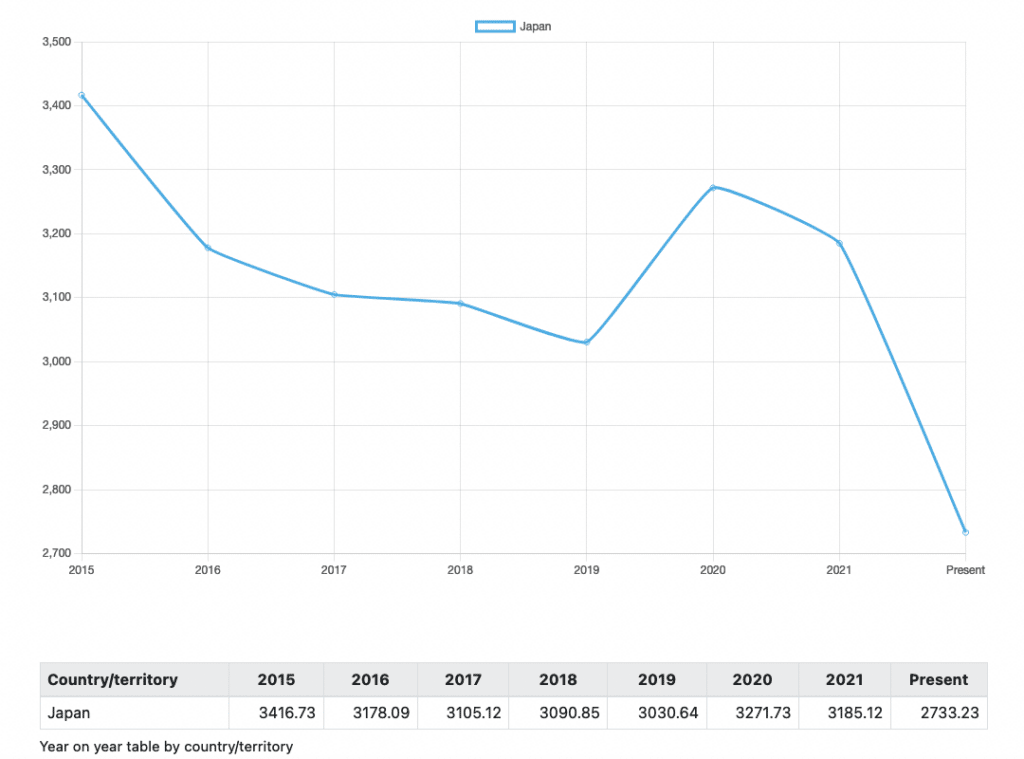
When we look at how these factors play out on the world stage, we can see in data from Nature Index that Japan’s overall research output had been in steady decline from 2015-2019. It saw a rise in 2020 but resumed its decline in 2021 and into 2022. (see Figure 1).
Figure 1: All research outputs from Japan 2015-2021 that are tracked by Nature Index. (2022 data is for a 12-month period to 30 September 2022.) Output is measured by Japan’s share of authorship of articles in the index.
Data derived from Dimensions shows that while Japan ranked fifth in the world in terms of all article outputs in 2019-2021 (see Figure 2), it was ranked below 11th globally for infectious diseases articles (Figure 3).
All research articles in Dimensions (2019-2021)
United States
2,357,592
China
2,141,367
United Kingdom
729,785
Germany
612,787
Japan
568,577
India
565,016
Italy
402,965
Russia
400,272
Canada
388,198
France
383,458
Figure 2: World ranking of all research outputs from 2019-2021. (Source:Dimensions.)
All infectious diseases publications* in Dimensions (2019-2021)
United States
179,465
China
74,010
United Kingdom
61,122
India
42,280
Italy
33,113
Germany
26,830
Brazil
26,053
Canada
25,252
France
24,312
Spain
23,013
Australia
22,557
Japan
18,737
Figure 3: World ranking of all infectious diseases research outputs from 2019-2021. (Source: Dimensions.)
* includes articles, preprints and conference proceedings.
To put Japan’s research output across all areas in context, between the years 2015 and 2021 Japan accounted for 3.8% of total publications with nearly 1.3 million according to Dimensions data, making it the fifth biggest in the world in terms of output. However, while this position rises to fourth when it comes to cancer research with 5.5% of publications, it drops markedly to below 11th for infectious disease research, accounting for only 2.5%, and this drops to 2% when we look at just the last two years in 2020 and 2021 (see Figure 4).
Japan 2015-2021 – publications* and rank
Field
JapanPublications
Global Total
% of Global
Rank
All fields
1,279,452
34,108,770
3.8
5th
Cancer
105,924
1,926,313
5.5
4th
Infectious Disease
31,613
1,268,300
2.5
<11th
Infectious Diseases (2020-21 only)
15,206
745,496
2.0
<11th
Figure 4: Global ranking and comparison of all Japanese publications, compared with publications about cancer and infectious diseases. (Source: Dimensions.) * includes articles, preprints and conference proceedings.
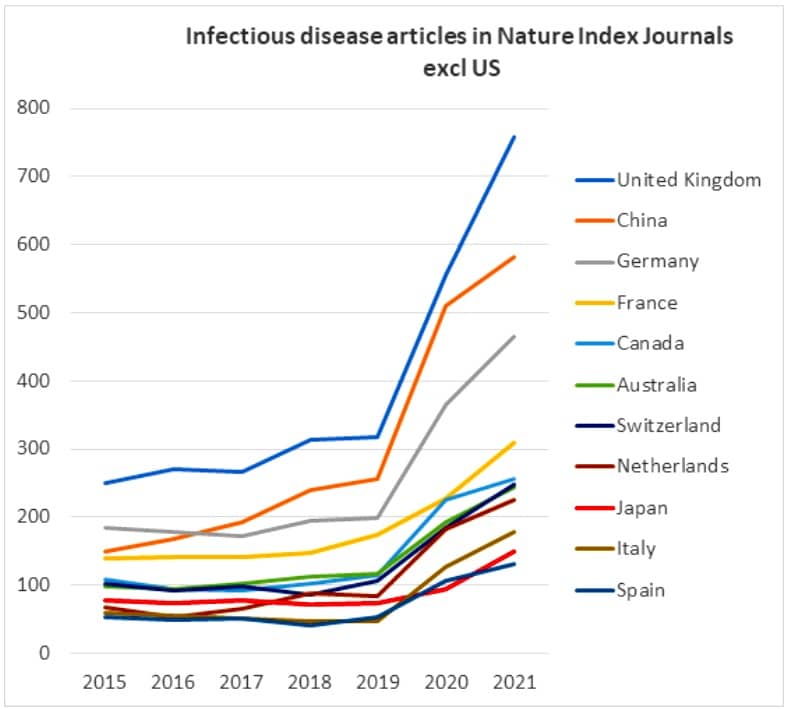
When we flesh this out with the performance of other countries in related areas, we can see that while China, the UK and Germany have surged ahead in recent years when it comes the output of research across 90 different infectious diseases in Nature Index (tracked in Dimensions), Japan has fallen behind the likes of Switzerland and The Netherlands. Even more starkly, it has failed to match the huge spikes in coronavirus-related research seen in other major industrialized countries (in Figure 5, the US has been removed due to it being so far ahead).
Figure 5: Global comparison (excluding the US) of infectious diseases research articles. (Source: Nature Index journals, tracked in Dimensions. NB articles tracked in Nature Index journals in Dimensions include review articles and news, whereas in Nature Index only primary research articles are tracked. But the trends for articles in Nature Index journals are very similar to the trends for Nature Index).
As stated earlier, while much of the Japanese government’s funding for infectious diseases research is directed to the National Institute of Infectious Disease (NIID), and despite being regarded as one of the top institutions in Japan for infectious diseases by Japan’s Ministry of Health, Labour and Welfare (MHLW), NIID does not even appear in the top 10 of Japanese institutions by number of publications on COVID in 2020 and 2021, with only 287 articles out of a total of 14,960 articles for Japan – or only 1.9% of the country’s output – while the University of Tokyo had 1,417 articles or 10% of overall publications.
Patents pending?
Further to the earlier criticism about Japan’s reduced vaccine development capacity, by exploring data of patents recorded during the first two calendar years of the pandemic we can see that Japan’s activity has mirrored that of its research performance, ranking 11th in the total number of COVID-19 patents recorded. The countries and regions ahead of it, however, are quite different, with South Korea, India and Taiwan all well ahead of Japan (see Figure 6).
COVID-19 patents recorded in Dimensions (2020-2021)
United States
7,254
China
4,326
South Korea
1,883
India
1,600
Germany
804
Spain
524
United Kingdom
521
Taiwan
421
Canada
403
France
359
Japan
346
Figure 6: World ranking of all COVID-19-related patents recorded, 2020-2021. (Source: Dimensions.)
“We must prepare for the next pandemic.”
While COVID-19 isn’t showing any signs of going away, what lessons can Japan learn from its experience? And what does the future hold for its infectious diseases research and collaborations?
The recent announcement of a concerted vaccination research program to protect against future epidemics in Japan will see a US$2 billion injection of funds into this critical area, which is no doubt welcome news. And while the experts say there needs to be increased government funding for research, that’s not their sole focus.
Dr Ohmagari says despite the lack of infectious diseases research being conducted in Japan, the country already has a good base to build upon. “I think the level of Japanese research on infectious diseases, especially basic research, is high by global standards. However, epidemiological and clinical research is not so active. The number of researchers is small,” he says.
The pandemic might already be spurring on that change: “In recent years, young researchers have gradually become interested in clinical and research work on infectious diseases. I hope that they will quickly build up their strength and produce results.”
Professor Suematsu says Japan must learn from the research and healthcare systems in place in other countries. In particular, he’s “very impressed” with the UK’s approach to foster researchers with integrated biotechnology training, something he says “has never happened in Japan”. He also envies the UK government’s central information overview and a network of data sharing.
Professor Kitano agrees that improved data sharing needs to be an outcome from the pandemic. He also proposes that the government pool all of its experts and learn from their collective experience, “in case the next thing comes”.
“That structure is yet to be seen but I am proposing that we need to have this – a group of people who have gone through this kind of ‘wartime emergency’ and understand how chaotic things can be.”
He says this group would be “more of a permanent structure, to provide the government with expert advice next time we have a pandemic”.
“There is a stronger awareness that Japan may need to do better on this front for the benefit of the population,” he says.
Dr Ohmagari says Japan needs to be ready now for what’s next. “COVID-19 has revealed that there is room for improvement in research and development in the field of infectious diseases in Japan. We must prepare for the next pandemic,” he says.
“We have already started to build a system in terms of policy in Japan. However, the same problem was pointed out after the 2009 pandemic influenza, but no measures had been taken. We must reflect on this. We must continue to promote these policies without interruption.
“This will require political will backed by a deep understanding of the public. And our generation of researchers must do our best to ensure that this trend will never be halted,” he says.
In the words of the late Dr Nakajima, Japan must learn the lessons of its past or risk “fatal complacency”.
“King of masks” – a culture of survival
In his book How to Prevent the Next Pandemic, Bill Gates suggests some harsh lessons the world should learn from its collective experience of COVID-19. Gates had famously published a paper in the New England Journal of Medicine in 2015 expressing concern a worldwide pandemic could cost millions of lives and trillions of dollars. While Gates is critical of much of what happened before and during the pandemic, he reserves praise for some countries’ handling of the chaos. In particular he singles out Japan, referring to the country as the “King of masks”. Japan’s cultural differences have been its salvation.
In 2022, the world has, for the most part, tried to move on from the COVID-19 pandemic. In many countries, to walk around the streets of busy cities now, one would hardly notice that something so monumental had happened. One or two people wearing masks and some faded signs on shop windows pointing out abandoned policies for customers are all that is left of those days not so long ago when towns and cities were under lockdown.
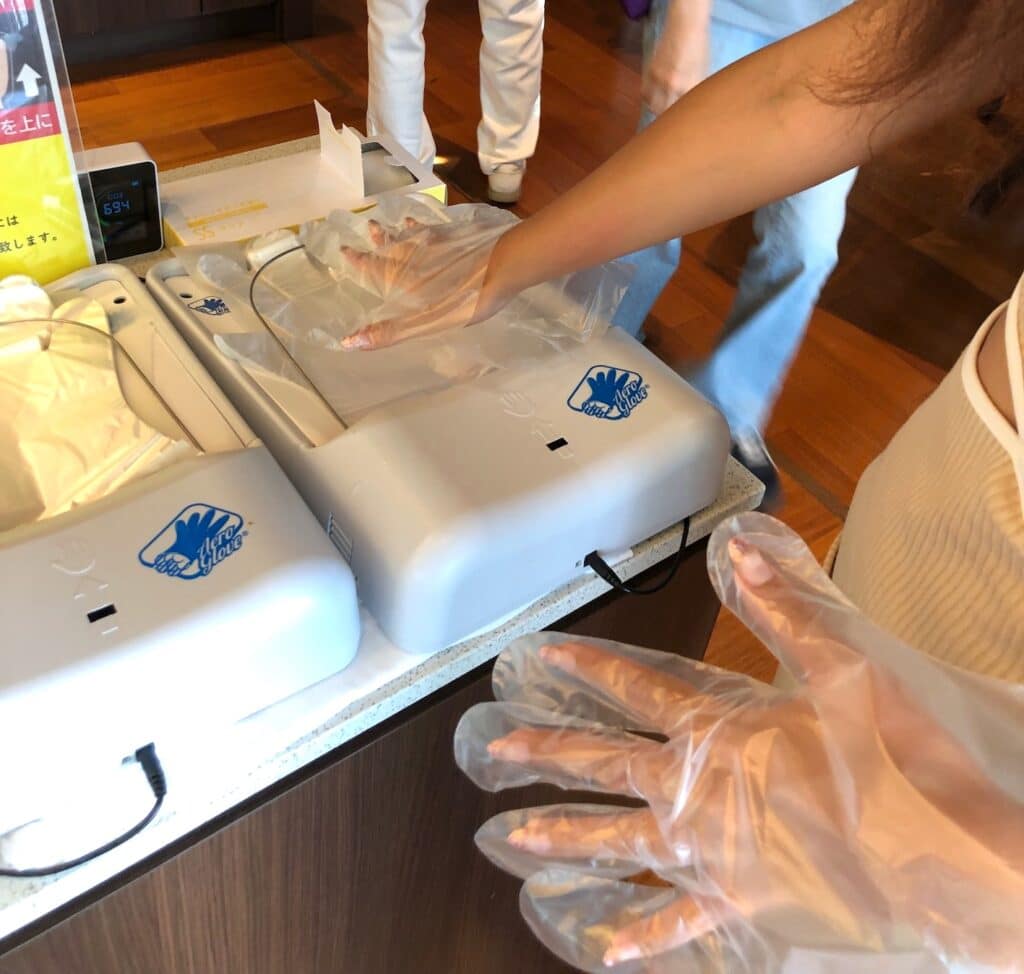
In Japan, however, things are different. While restrictions are easing, many rules are still in effect, and mask-wearing is ubiquitous. Measures such as plastic panels between diners in restaurants and donning of plastic gloves when collecting food at buffets still persist in Tokyo and other major cities – measures that were ditched long ago in other countries, if they were ever adopted in the first place. Japan and its strict procedures have received more coverage than most in the global media, thanks in part to its relatively good record on COVID-19, but also because it hosted the single biggest global event of 2021 in the shape of the Tokyo Olympics, delayed from 2020 at the height of the pandemic, and held with hardly any spectators from outside Japan. The resolute approach to put on the Games no matter what and the mandate of strict adherence to social distancing and other measures meant that Japan was put under a huge amount of scrutiny in the Western media, intrigued about how the country and its government approached the event.
When it came to a critical test, the stereotypical image of Japan as an ordered, disciplined population, one that is prepared to comply with restrictions, has worked in its favour. Like many countries, Japan has also seen protests and political backlash. And like many, Japan has also been hit with additional waves of infections, continuing to test its resolve.
Research critical to Japan’s success
Despite criticism of a lack of research into infectious diseases and COVID-19 in Japan, the country also saw some outstanding examples of scientific and technological knowhow, helping to safeguard the community.
Professor Hiroaki Kitano, President and CEO of Sony Computer Science Laboratories Inc., played a central role in the early days of the pandemic to better understand the spread of the virus and how it could be protected against.
Professor Kitano was able to use the modelling his teams had produced to show the startling impact preventative measures had on the spread of the disease. In two areas – confined spaces, such as a karaoke bar (see image and video), and mask-wearing – Professor Kitano was able to show the efficacy of certain restrictions that could massively reduce infection of COVID-19 and its variants. This helped to justify lockdown procedures but also supported a measured opening up of society with certain behavioural guidelines, such as maintaining contact within your own community – known as the “Stay with your community” campaign in late 2021.
He also demonstrated an optimal vaccination strategy that was implemented during late spring to fall of 2021 possibly resulted in very low COVID-19 cases in Japan in the fall of 2021.
An example of some of the modelling work conducted by Dr Makoto Tsubokura at RIKEN’s Center for Computational Science and Kobe University, a member of Professor Kitano’s COVID-19 AI and Simulation team under the Cabinet Secretariat. (Source: COVID-19 AI & Simulation Project of the Cabinet Secretariat of the Japanese Government and RIKEN.) Video: https://www.covid19-ai.jp/wp-content/uploads/2021/08/article212-7.mp4
The ability of Professor Kitano and his colleagues in Japan in translating the data they had collected and impacting policy may have been crucial in keeping the number of deaths so low since the start of the COVID-19 pandemic; even more remarkable in an environment in which the country has faced declining levels of funding and publications in infectious disease research.
About Dimensions
Part of Digital Science, Dimensions is a modern, innovative, linked research data infrastructure and tool, re-imagining discovery and access to research: grants, publications, citations, clinical trials, patents and policy documents in one place. www.dimensions.ai
About Nature Index
The Nature Index is a database of author affiliations and institutional relationships. The index tracks contributions to research articles published in 82 high-quality natural-science journals, chosen by an independent group of researchers.
The Nature Index provides absolute and fractional counts of article publication at the institutional and national level and, as such, is an indicator of global high-quality research output and collaboration. Data in the Nature Index are updated regularly, with the most recent 12 months made available under a Creative Commons licence at natureindex.com. The database is compiled by Nature Portfolio, part of Springer Nature.
Image credits: Main image: Masked commuters in Osaka, Japan. Source: Stock image.
Face masks on sale in Japan. Source: David Swinbanks.
Glove dispensers in a Japanese restaurant. Source: David Swinbanks.
Masked geisha dolls. Source: Rafael Randy Cardoso Garcia.
COVID-19 test and Tokyo 2020 Games concept. Source: Stock image.
Masked commuters in Tokyo, Japan. Source: Stock image.
Simon Linacre, Head of Content, Brand & Press | Digital Science
Simon has 20 years’ experience in scholarly communications. He has lectured and published on the topics of bibliometrics, publication ethics and research impact, and has recently authored a book on predatory publishing. Simon is also a COPE Trustee and ALPSP tutor, and holds Masters degrees in Philosophy and International Business. He lived and worked in Japan for three years in the 1990s.
David Ellis, Press, PR & Social Manager | Digital Science
David has 30 years’ experience in media and communications. With a background in broadcast journalism, his career focus has been in research communication – including science, health science and medicine – spanning 25 years of service in the university sector. His experience also includes both internal and external communications in the health and manufacturing sectors.
David Swinbanks, Chairman | Springer Nature Australia & NZ
David is Chairman for Springer Nature in Australia and New Zealand and Founder of Nature Index. He is also a Senior Advisor to Digital Science. Following a postdoc in deep-sea research at Tokyo University, David began his career with Nature as Tokyo Correspondent in 1986 and established Nature Japan KK in 1987 with two Japanese colleagues, which expanded to 120 employees by 2012 spanning the Asia-Pacific region.