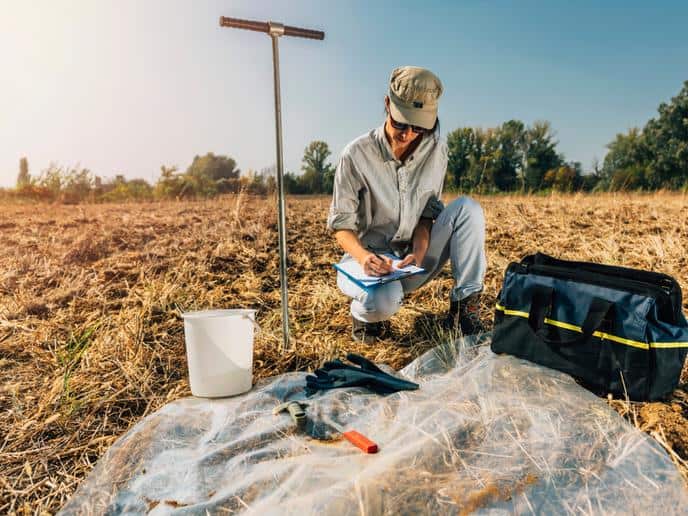
Does an ally against climate change lie beneath our feet?

Does an ally against climate change lie beneath our feet?

By enhancing soil’s ability to store carbon, the ground we walk on could play an essential role in keeping carbon dioxide out of the air.

If we’re going to fight the effects of climate change, we’re going to have to get our hands dirty.

‘With a huge potential to act as a carbon sink, the soil that sits right under our feet could be at the front lines of climate change,’ said Dr Dragutin Protic, CEO of GILab, a company dedicated to developing solutions based on ICT and geoinformatics.

A carbon sink is a reservoir capable of accumulating and storing carbon for an indefinite period. In doing so, it lowers the concentration of carbon dioxide (CO2) from the atmosphere.

According to Dr Protic, who cited some recent scientific research, soil has the potential to remove an estimated 1.09 gigatonnes of CO2 per year.

From carbon sink to carbon emitter

Even though soil carbon sequestration appears to be a natural, no-regret solution to mitigating climate change, after decades of poor land management, Europe’s soils have been significantly degraded. ‘Soil degradation leads to a reduction in soil organic matter (SOM), which is where carbon is stored,’ explained Dr Protic. ‘In fact, according to recently published scientific research, nearly half of EU soils now have less than 2% SOM.’

As a result, instead of capturing carbon, soil is releasing carbon into the air, setting the scene for a climate catastrophe.

‘Europe’s croplands are losing carbon at a rate of 0.5% per year,’ warned Jean-Francois Soussana, a researcher and vice-chair at INRAE, (France’s National Research Institute for Agriculture, Food and Environment), and a member of the Mission Board on Soil Health and Food. ‘The picture is even more dire for peatlands which, as they are being rapidly drained, release huge amounts of carbon into the atmosphere.’

In an effort to reverse this trend, both Dr Protic and Soussana are leading efforts to preserve and enhance soil’s carbon sequestration capabilities. ‘Increasing carbon sequestration in soil enhances its resilience to the rapidly changing climate,’ said Soussana. ‘It also improves the quality and fertility of agricultural soils, as well as contributing to food security.’

Empowering soil sequestration smart farmers

As both researchers point out, storing carbon in soil organic matter requires healthy plants, high-quality soils and, most importantly, smart farmers. ‘It seems crucial to empower farmers and other stakeholders through effective knowledge creation and sharing,’ remarked Soussana.

One initiative helping to facilitate this knowledge exchange is the AgriCapture project. Led by Dr Protic, the project is developing a platform that uses Earth Observation to help farmers and public authorities explore opportunities in regenerative agriculture – a method of producing food that has a positive impact on the environment.

Earth Observation uses remote sensing technologies, such as the EU’s Copernicus satellite system, along with various ground-based techniques, to gather information about the Earth’s physical, chemical and biological systems. Using this data, the platform will map soil carbon and monitor soil carbon sequestration across Europe.

‘This will allow farmers to visually see how implementing regenerative agriculture practices could increase both carbon sequestration and farm profitability,’ explained Dr Protic. ‘It will also allow farmers to monitor their carbon release/capture ratio to ensure that all carbon offsetting goals are being met.’

The AgriCapture project is also working to verify and support the implementation of regenerative agricultural practices that, if successful, would result in the certification and generation of ‘carbon credits’.

‘Considering soil’s significant potential to act as a carbon sink, regenerative agriculture is a powerful tool for mitigating climate change,’ said Dr Protic.

Putting farmers at the vanguard of carbon sequestration

Another initiative using data to drive soil carbon sequestration is CIRCASA. Led by INRAE, the initiative is working to build an integrated soil carbon balance monitoring system and foster international research cooperation on soil carbon.

According to Dr Soussana, who leads the initiative, by bringing together data from satellites, soil surveys, long-term experiments and CO2 flux measurements, the system will empower farmers to be at the vanguard of soil carbon sequestration.

Beyond simply enabling farmers to monitor soil organic carbon, Soussana says the system can help teach us to create healthy soil by supporting nature-based carbon sequestration. ‘By ensuring that farmers know exactly how much carbon is being stored in their soil, they will be well positioned to make informed decisions that will lead to both healthy yields and a healthy planet,’ said Dr Soussana.

Rehabilitating the carbon sink

Through initiatives like AgriCapture and CIRCASA, Dr Soussana is confident that Europe will be able to enhance its soils’ carbon sequestration levels, thus ensuring that soil remains a carbon sink and not a carbon emitter.

‘We really do not have a choice, and we have to act now,’ stated Soussana. ‘Without carbon sequestration and the conservation of soils, I don’t see a viable route to staying within the +2°C by 2030 as proposed by the Paris Climate Agreement or to achieving the ambitious goals of the European Green Deal.’

Laying the foundation for a common EU framework to preserve, protect and restore soil, the Commission is adopting a new Soil Strategy this year. In addition, a Horizon Europe mission will lead the transition towards healthy soils for people, nature and the climate by 2030.

This article is part of our Monthly Focus titled Bringing Europe’s soils back to life. The research in this article was funded by the EU. If you liked this article, please consider sharing it on social media.


from ScienceBlog.com https://ift.tt/39TijkI

Faces of ancient mummies revealed via DNA

Faces of ancient mummies revealed via DNA

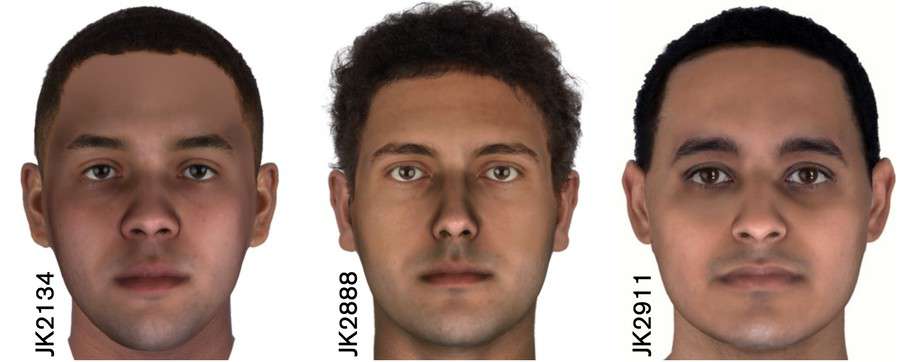
At the 32nd International Symposium on Human Identification (ISHI), being held this week in Orlando, FL, Parabon NanoLabs will unveil for the first time the predicted faces of three ancient mummies from an ancient Nile community in Egypt known as the Abusir el-Meleq. The mummy samples, estimated to be between 2,023 and 2,797 years old, were processed by researchers from the Max Planck Institute for the Science of Human History and the University of Tubingen in Germany (Schuenemann et al. 2017).1 Enzymatic damage repair was performed on each sample, after which they were sequenced with a capture assay targeting 1.24 million single nucleotide polymorphisms (SNPs) and aligned to the human reference genome. Parabon used the resulting whole-genome sequencing data, which is publicly available in the European Nucleotide Archive (ENA), and selected three samples with the highest quality data to analyze. The company believes this is the first time comprehensive DNA phenotyping has been performed on human DNA of this age, and the results are being presented to the forensic community in ISHI poster #51.Learn More About Snapshot DNA Analysis »

This work was made possible by recent bioinformatic advances in the field of low-coverage imputation, which allows for highly accurate determination of common SNP genotypes from low-coverage sequencing data. The sequencing coverages for the three mummy samples were only 0.13X, 0.23X, and 0.96X, respectively, meaning that each position in the genome was covered less than one time on average. Because individuals have two copies of each SNP, only 0.1%, 0.3%, and 2.8% of the SNPs, respectively, could be directly called from the data, which would not be enough information for phenotype prediction or for traditional imputation. With low-coverage imputation, however, the SNP call rates jumped to 29%, 39%, and 65%, respectively. Parabon bioinformaticist and WGS analyst, Dr. Janet Cady, who spearheaded the work, is enthusiastic about the results. “Parabon has been the leader in forensic microarray analysis for years, and with the introduction of this new imputation technology, we can now handle even the most challenging samples, ancient or forensic” she said.See All Published Police Investigations »

After the imputation step, Parabon applied its Snapshot DNA Phenotyping pipeline to each of the three mummy samples. Snapshot was designed to operate on challenging forensic samples, so it is specifically calibrated to handle missing data, some of which remains even after low-coverage imputation. Snapshot predicted each mummy’s ancestry, pigmentation, and face morphology. Interestingly, their ancestry was determined to be more similar to modern Mediterranean and Middle Eastern individuals than to modern Egyptians. Their complexions were predicted to be light brown, with dark eyes and hair and no freckles. These results are highly consistent with Schuenemann et al’s conclusions that “ancient Egyptians shared more ancestry with Near Easterners than present-day Egyptians, who received additional sub-Saharan admixture in more recent times” and that they had an allele for lighter skin. Three-dimensional face morphology was inferred by predicting the values of face principal components (PCs), which were then transformed into 3D graphical meshes. The face predictions were compared to one another, and heat maps were calculated to show the differences between the subjects. These differences were then emphasized to create caricatured faces, which were combined with the pigmentation predictions to create composites of the individuals’ likely appearance at age 25 by Parabon’s forensic artist.Read More Snapshot Success Stories »

“It’s great to see how genome sequencing and advanced bioinformatics can be applied to ancient DNA samples,” said Dr. Ellen Greytak, Parabon’s Director of Bioinformatics. “Just like in Parabon’s law enforcement casework, these techniques are revolutionizing ancient DNA analysis because they operate on fragmented DNA and have been shown to be sensitive down to only 10 picograms of DNA.”

A print-ready PDF of the scientific poster can be downloaded from Parabon’s website at https://snapshot.parabon.com/ishi2021-posterFaces of ancient mummies revealed via DNA.


from ScienceBlog.com https://ift.tt/39Qq3UE

Wiggling worms suggest link between vitamin B12 and Alzheimer’s

Wiggling worms suggest link between vitamin B12 and Alzheimer's

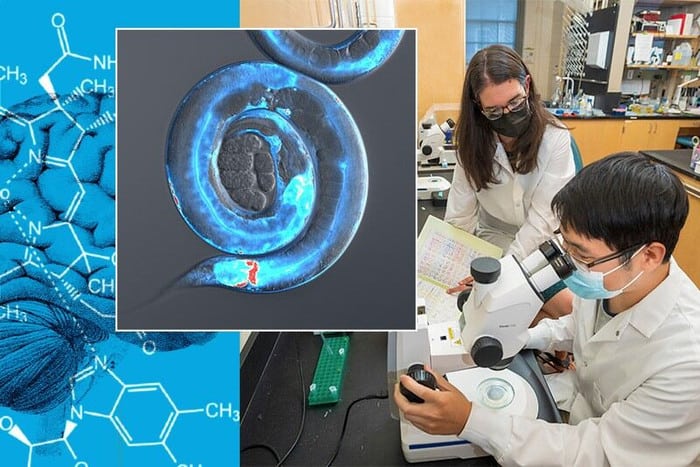
Worms don’t wiggle when they have Alzheimer’s disease. Yet something helped worms with the disease hold onto their wiggle in Professor Jessica Tanis’s lab at the University of Delaware.

In solving the mystery, Tanis and her team have yielded new clues into the potential impact of diet on Alzheimer’s, the dreaded degenerative brain disease afflicting more than 6 million Americans.

A few years ago, Tanis and her team began investigating factors affecting the onset and progression of Alzheimer’s disease. They were doing genetic research with C. elegans, a tiny soil-dwelling worm that is the subject of numerous studies.

Expression of amyloid beta, a toxic protein implicated in Alzheimer’s disease, paralyzes worms within 36 hours after they reach adulthood. While the worms in one petri dish in Tanis’s lab were rendered completely immobile, the worms of the same age in the adjacent petri dish still had their wiggle, documented as “body bends,” by the scientists.

“It was an observation my master’s student Kirsten Kervin made,” said Tanis, an assistant professor in UD’s Department of Biological Sciences. “She repeated the experiment again and again, with the same results.”

After years of research, the team finally turned up an important difference, Tanis said. While all the worms were grown on a diet of E. coli, it turns out that one strain of E. coli had higher levels of vitamin B12 than the other. Although Tanis’s work was focused on genetic factors at the time, she redirected her research to examine this vitamin and its protective role.

Learning from worms

C. elegans is a nematode, a slender, transparent worm only about a millimeter long, that lives in soil, where it eats bacteria. Since the 1970s, this worm has been viewed as a model organism, the subject of numerous studies because it is a much simpler system than us humans for studying cell biology and diseases.

“As humans, we have immense genetic diversity and such complex diets that it makes it really hard to decipher how one dietary factor is affecting the onset and progression of Alzheimer’s,” Tanis said. “That’s where the worms are amazing. The worms we use all have exactly the same genetic background, they react to amyloid beta like humans do, and we can exactly control what they eat, so we can really get down to the molecular mechanisms at work.”

In the brains of humans with Alzheimer’s, the buildup of amyloid beta over the years causes toxic effects in cells, resulting in reduced energy, fragmentation of the mitochondria — the cells’ power plants, and oxidative stress from an excess of free radicals. The same thing happens in C. elegans, Tanis said, but in a matter of hours. Amyloid beta causes paralysis in the worms.

“The read-out is black or white — the worms are either moving or they are not,” Tanis said. “When we gave vitamin B12 to the worms that were vitamin B12 deficient, paralysis occurred much more slowly, which immediately told us that B12 was beneficial. The worms with B12 also had higher energy levels and lower oxidative stress in their cells.”

The team determined that vitamin B12 relies on a specific enzyme called methionine synthase to work. Without the presence of that enzyme, B12 has no effect, Tanis said. Also, adding the vitamin to the diet only worked if the animals were deficient in B12. Giving more B12 to animals with healthy levels does not help them in any way. The team also showed that vitamin B12 had no effect on amyloid beta levels in the worms.

Tanis team power

Tanis credits her students for their hard work and contributions. The first author on the research article, Andy Lam, is pursuing a dual degree at UD — a doctorate in biological sciences and a master of business administration. He spent years working on the laboratory protocols critical to the study. He ran dozens and dozens of experiments and documented observations overnight numerous times.

A future goal is to automate these experiments using a high-throughput system at UD’s Bio-Imaging Center coupled with deep learning analysis to detect if the worms are moving or not. That would allow the team to more rapidly examine the interactions between diet and genetics.

“We’ve essentially identified this molecular pathway and we’re looking to see what else it activates,” Tanis said. “Can B12 be protective for multiple neurodegenerative diseases such as ALS and Parkinson’s? We’re looking into it.”

While Kirsten Kervin graduated from UD with her master’s degree and is now a research scientist at WuXi AppTec in Philadelphia, it was her astute observation about C. elegans that set the project into motion.

“That initial observation opened up an entirely different world,” Tanis said, “which is somehow the story of my research career here at UD. I came here thinking I would be studying one thing, but now I’m studying another. So it hasn’t been straightforward, but it has opened up an entirely new research area we are pursuing.”

That “we” working on this project now includes two graduate students, a postdoctoral research associate, three undergraduate students and collaborations with the Bio-Imaging Center and multiple UD labs.

“Right now, there is no effective treatment for Alzheimer’s disease,” Tanis said. “There are certain factors that you cannot change – you cannot change the fact that you age, and you cannot change a genetic predisposition to Alzheimer’s disease. But one thing you can control is what you eat. If people could change their diet to affect the onset of disease, that would be fantastic. That’s something my lab is excited to continue to explore.”


from ScienceBlog.com https://ift.tt/3mdNcGf

Stress of COVID-19 pandemic caused irregular menstrual cycles

Stress of COVID-19 pandemic caused irregular menstrual cycles

Women who menstruate experienced irregularities in their menstrual cycle because of increased stress during the COVID-19 pandemic, a new Northwestern Medicine study has found.

This is the first U.S. study to evaluate the impact of stress on peoples’ periods.

The study surveyed more than 200 women and people who menstruate in the United States between July and August 2020 in order to better understand how stress during the COVID-19 pandemic influenced their menstrual cycles. More than half (54%) of the individuals in the study experienced changes in their menstrual cycle following the start of the COVID-19 pandemic in March 2020.

Individuals who experienced higher levels of stress during the COVID-19 pandemic were more likely to experience heavier menstrual bleeding and a longer duration of their period, compared to individuals with moderate stress levels, the study found.

The study, “Impact of Stress on Menstrual Cyclicity During the COVID-19 Pandemic: A Survey Study,” was published September 28 in the Journal of Women’s Health. It provides a better understanding of how the COVID-19 pandemic has impacted women’s mental and reproductive health, the study authors said.

“We know added stress can negatively impact our overall health and well-being, but for women and people who menstruate, stress can also disrupt normal menstrual cycle patterns and overall reproductive health,” said lead and corresponding author Nicole Woitowich, research assistant professor of medical social sciences at Northwestern University Feinberg School of Medicine.

Prior research has found that menstrual cycle irregularities are often reported by women who experience mood disorders such as anxiety and depression, or by those who are facing acute life stressors such as natural disasters, displacement, famine or defection.

“Given the unprecedented nature of the pandemic and its significant impact on mental health, this data is unsurprising and confirms many anecdotal reports in the popular press and on social media,” Woitowich said.

Since the onset of the pandemic, social media has been one of the major platforms where women and people who menstruate could share questions or concerns about their menstrual cycles. Only recently have these concerns been addressed by the biomedical research community.

“Reproductive health should not be ignored in the context of COVID-19,” Woitowich said. “We are already seeing the ripple effects of what happens when we fail to consider this important facet of women’s health as many are now experiencing menstrual cycle irregularities as a result of the COVID-19 vaccines or COVID-19 infection.”


from ScienceBlog.com https://ift.tt/2ZKt4nO

Clover growth in Mars-like soils boosted by bacterial symbiosis

Clover growth in Mars-like soils boosted by bacterial symbiosis

Clover plants grown in Mars-like soils experience significantly more growth when inoculated with symbiotic nitrogen-fixing bacteria than when left uninoculated. Franklin Harris of Colorado State University, U.S., and colleagues present these findings in the open-access journal PLOS ONE on September 29, 2021.

As Earth’s population grows, researchers are studying the possibility of farming Martian soils, or “regolith.” However, regolith is lacking in some essential plant nutrients, including certain nitrogen-containing molecules that plants require to live. Therefore, agriculture on Mars will require strategies to increase the amount of these nitrogen compounds in regolith.

Harris and colleagues hypothesize that bacteria could play a cost-effective role in making Martian soils more fertile. On Earth, bacteria in soils help convert or “fix” atmospheric nitrogen into the molecules that plants need. Some of these microbes have symbiotic relationships with plants, in which they fix nitrogen within nodules found on plant roots.

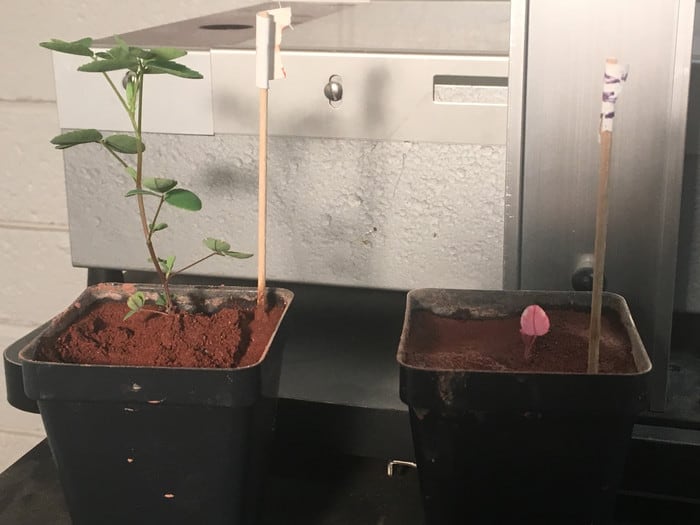
To explore a possible role for symbiotic nitrogen-fixing bacteria in astroagriculture, the researchers grew clover in man-made regolith that closely matches that of Mars. They inoculated some of the plants with the microbe Sinorhizobium meliloti, which is commonly found in clover root nodules on Earth. Previous research had shown that clover can be grown in regolith, but had not explored inoculation with nitrogen- fixers.

The researchers found that the inoculated clover experienced 75% more root and shoot growth compared to the uninoculated clover. However, the regolith surrounding the inoculated plants showed no signs of elevated NH4—an essential nitrogen-containing molecule for plants—compared to the regolith surrounding uninoculated plants.

These findings suggest that the symbiotic microbes boosted clover growth, but did not result in excess production of nitrogen compounds that other plants growing nearby could hypothetically use. The researchers also grew some clover in potting soil and noted certain differences in the symbiotic relationship when comparing the plants grown in regolith versus soil.

These findings suggest the possibility that symbiosis between plants and nitrogen-fixing bacteria could aid agriculture on Mars. Future research could continue to explore such relationships with other crops and address issues with plant toxicity in regolith.

The authors add: “This study shows that nodule forming bacteria Sinorhizobium meliloti has been shown to nodulate in Martian regolith, significantly enhancing growth of clover (Melilotus officinalis) in a greenhouse assay. This work increases our understanding of how plant and microbe interactions will help aid efforts to terraform regolith on Mars.”


from ScienceBlog.com https://ift.tt/3CUHyjh

Plastic shopping bags release thousands of dissolved compounds in sunlight

Plastic shopping bags release thousands of dissolved compounds in sunlight

Although plastics are durable and strong, a little sunlight can split them apart into microscopic pieces and spur reactions, producing new molecules that can end up in the environment. But how the polymers and additives in these materials influence this process is a mystery. Now, researchers reporting in ACS’ Environmental Science & Technology show that additives in commercial shopping bags boost sunlight’s ability to convert these solid materials into thousands of dissolved compounds within days.

Once plastic pollution gets into the environment, its fate is still largely unknown, especially in aquatic ecosystems. Some of the plastic items, such as polyethylene shopping bags, float in water, which exposes them directly to the sun’s rays. Previous researchers have shown that the pure polymers commonly used to make these items produce water-soluble molecules and gases when placed in ultraviolet light, a component of sunlight. However, plastics in consumer goods aren’t pure; a variety of carbon-based organic additives and mineral additives are mixed in to give them color or make them more stable. So, Collin Ward and colleagues wanted to see exactly how the composition of single-use shopping bags influenced the dissolved compounds generated by sunlight over short periods.

With X-ray diffraction, the researchers examined four polyethylene plastic bags from big-box retailers and a pure polyethylene polymer film for mineral additives. No additives were identified in the pure polymer, but calcium carbonate and titanium dioxide were found in three of the bags, and only calcium carbonate was found in the fourth bag. Next, the researchers put pieces of the plastic bags and the polymer into separate containers with water, and then in the dark or under simulated daylight for up to a week. Some water-soluble compounds were released from the different pieces in the dark. But in sunlight, more compounds were released, ranging from 5,000 to 15,000 dissolved compounds, which equates to 1.1-fold to 50-fold increases over the number of compounds released in the dark. Of the approximately 9,000 molecules generated by the pure polymer when exposed to sunlight, only about a quarter overlapped with those from the bags. Based on these results, the researchers say that sunlight’s reactions with solid plastics can transform them into a plethora of water-soluble compounds whose levels and identities vary, depending on the additives used.

The authors acknowledge funding from The Seaver Institute, the Gerstner Family Foundation, the Woods Hole Oceanographic Institution, and the National Science Foundation’s Graduate Research Fellowship ProgramDivision of Chemistry and Division of Materials Research.

The American Chemical Society (ACS) is a nonprofit organization chartered by the U.S. Congress. ACS’ mission is to advance the broader chemistry enterprise and its practitioners for the benefit of Earth and all its people. The Society is a global leader in promoting excellence in science education and providing access to chemistry-related information and research through its multiple research solutions, peer-reviewed journals, scientific conferences, eBooks and weekly news periodical Chemical & Engineering News. ACS journals are among the most cited, most trusted and most read within the scientific literature; however, ACS itself does not conduct chemical research. As a leader in scientific information solutions, its CAS division partners with global innovators to accelerate breakthroughs by curating, connecting and analyzing the world’s scientific knowledge. ACS’ main offices are in Washington, D.C., and Columbus, Ohio.


from ScienceBlog.com https://ift.tt/3un2PPv

Extending LIGO’s Reach Into the Cosmos

Extending LIGO's Reach Into the Cosmos

Since LIGO’s groundbreaking detection, in 2015, of gravitational waves produced by a pair of colliding black holes, the observatory, together with its European partner facility Virgo, has detected dozens of similar cosmic rumblings that send ripples through space and time.

In the future, as more and more upgrades are made to the National Science Foundation-funded LIGO observatories—one in Hanford, Washington, and the other in Livingston, Louisiana—the facilities are expected to detect increasingly large numbers of these extreme cosmic events. These observations will help solve fundamental mysteries about our universe, such as how black holes form and how the ingredients of our universe are manufactured.

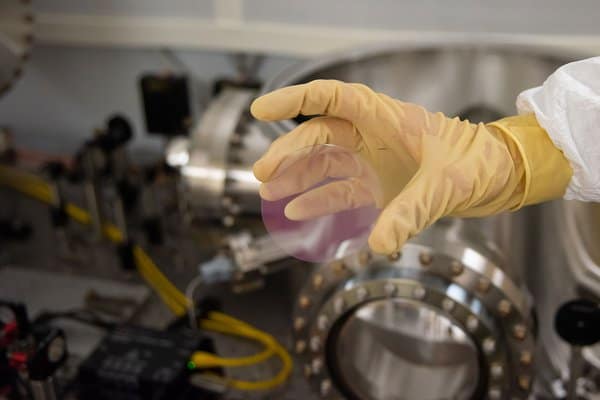
One important factor in increasing the sensitivity of the observatories involves the coatings on the glass mirrors that lie at the heart of the instruments. Each 40-kilogram (88-pound) mirror (there are four in each detector at the two LIGO observatories) is coated with reflective materials that essentially turn the glass into mirrors. The mirrors reflect laser beams that are sensitive to passing gravitational waves.

Generally, the more reflective the mirrors the more sensitive the instrument, but there is a catch: The coatings that make the mirrors reflective also can lead to background noise in the instrument—noise that masks gravitational-wave signals of interest.

Now, a new study by the LIGO team describes a new type of mirror coating made of titanium oxide and germanium oxide and outlines how it can reduce background noise in LIGO’s mirrors by a factor of two, thereby increasing the volume of space that LIGO can probe by a factor of eight.

“We wanted to find a material at the edge of what is possible today,” says Gabriele Vajente, a LIGO senior research scientist at Caltech and lead author of a paper about the work that appears in the journal Physical Review Letters. “Our ability to study the astronomically large scale of the universe is limited by what happens in this very tiny microscopic space.”

“With these new coatings, we expect to be able to increase the detection rate of gravitational waves from once a week to once a day or more,” says David Reitze, executive director of LIGO Laboratory at Caltech.

The research, which may have future applications in the fields of telecommunications and semiconductors, was a collaboration between Caltech; Colorado State University; the University of Montreal; and Stanford University, whose synchrotron at the SLAC National Accelerator Laboratory was used in the characterization of the coatings.

LIGO detects ripples in space-time using detectors called interferometers. In this setup, a powerful laser beam is split into two: each beam travels down one arm of a large L-shaped vacuum enclosure toward mirrors 4 kilometers away. The mirrors reflect the laser beams back to the source from which they originated. When gravitational waves pass by, they will stretch and squeezes space by nearly imperceptible and yet detectable amounts (much less than the width of a proton). The perturbations change the timing of the arrival of the two laser beams back at the source.

Any jiggling in the mirrors themselves—even the microscopic thermal vibrations of the atoms in the mirrors’ coatings—can affect the timing of the laser beams’ arrival and make it hard to isolate the gravitational-wave signals.

“Every time light passes between two different materials, a fraction of that light is reflected,” says Vajente. “This is the same thing that happens in your windows: you can see your faint reflection in the glass. By adding multiple layers of different materials, we can reinforce each reflection and make our mirrors up to 99.999 percent reflective.”

“What’s important about this work is that we developed a new way to better test the materials,” says Vajente. “We can now test the properties of a new material in about eight hours, completely automated, when before it took almost a week. This allowed us to explore the periodic table by trying a lot of different materials and a lot of combinations. Some of the materials we tried didn’t work, but this gave us insights into what properties might be important.”

In the end, the scientists discovered that a coating material made from a combination of titanium oxide and germanium oxide dissipated the least energy (the equivalent of reducing thermal vibrations).

“We tailored the fabrication process to meet the stringent demands in optical quality and reduced thermal noise of the mirror coatings,” says Carmen Menoni, professor at Colorado State University and member of the LIGO Scientific Collaboration. Menoni and her colleagues at Colorado State used a method called ion beam sputtering to coat the mirrors. In this process, atoms of titanium and germanium are peeled away from a source, combined with oxygen, and then deposited onto the glass to create thin layers of atoms.

The new coating may be used for LIGO’s fifth observing run, which will begin in the middle of the decade as part of the Advanced LIGO Plus program. Meanwhile, LIGO’s fourth observing run, the last in the Advanced LIGO campaign, is expected to commence in the summer of 2022.

“This is a game changer for Advanced LIGO Plus,” says Reitze. “And this is a great example of how LIGO relies heavily on cutting-edge optics and materials science research and development. This is the biggest advance in precision optical coating development for LIGO in the past 20 years.”

The study, titled, “Low Mechanical Loss TiO2:GeO2 Coatings for Reduced Thermal Noise in Gravitational Wave Interferometers,” was funded by the NSF and the Gordon and Betty Moore Foundation.


from ScienceBlog.com https://ift.tt/3ifJQ4I

Featured Post

A double-edged sword: the growing complexity of Medical Affairs publication performance data

The variety of channels and audiences that define scientific communications reach and engagement is growing. In turn, Medical Affairs teams...

Popular