David Julius ’77 shares the Nobel Prize in physiology or medicine

David Julius ’77 shares the Nobel Prize in physiology or medicine

David Julius ’77 shares the Nobel Prize in physiology or medicine

David Julius ’77 shares the Nobel Prize in physiology or medicine

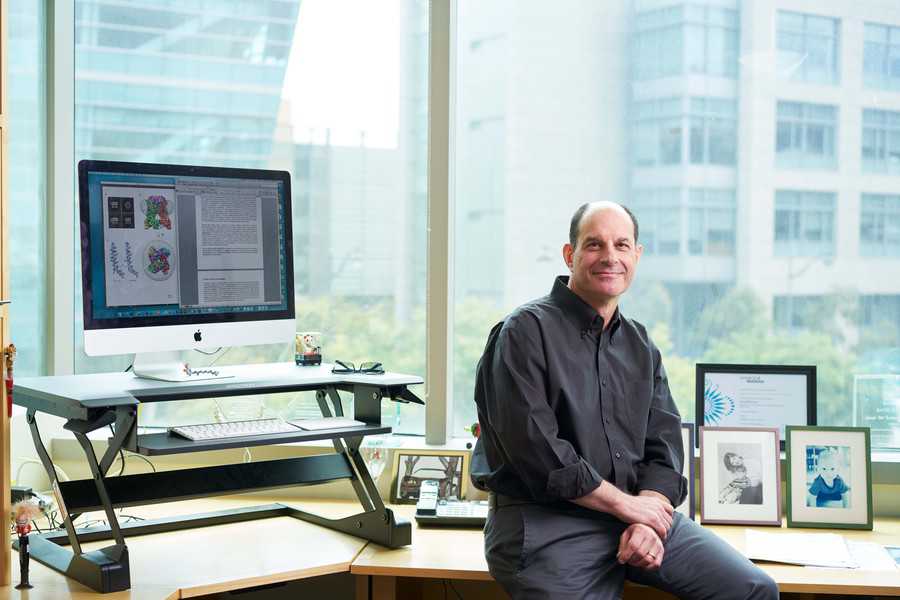
David Julius, a 1977 graduate of MIT, will share the 2021 Nobel Prize in physiology or medicine, the Royal Swedish Academy of Sciences announced this morning in Stockholm.

Julius, a professor at the University of California at San Francisco, shares the prize with Ardem Patapoutian, a professor at the Scripps Research Institute, for their discoveries in how the body senses touch and temperature.

Both scientists helped to answer a fundamental question regarding how the nervous system interprets our environment: How are temperature and mechanical stimuli converted into electrical impulses in the nervous system?

Using capsaicin, a compound that gives chili peppers their distinctive burning sensation, Julius was able to identify a receptor in the nerve endings of skin that responds to heat. His experiments revealed that this receptor, which he called TRPV1, is an ion channel that is activated by painful heat.

“David Julius’ discovery of TRPV1 was the breakthrough that allowed us to understand how differences in temperature can induce electrical signals in the nervous system,” according to today’s announcement by the Nobel committee.

Later, Julius and Patapoutian independently discovered a receptor called TRPM8, which responds to cold. Patapoutian was also honored for his discovery of receptors that respond to mechanical force in the skin and other organs. Their work on how the body senses temperature and mechanical stimuli is now being harnessed to develop treatments for a variety of diseases, including chronic pain.

Julius, who was born in New York, earned his bachelor’s degree in biology from MIT in 1977. He received a PhD in 1984 from University of California at Berkeley and was a postdoc at Columbia University before joining the faculty of the University of California at San Francisco in 1989.

He is the 39th MIT graduate to win a Nobel Prize.


from ScienceBlog.com https://ift.tt/3l8kbg8

Quenching the world’s thirst with off-grid water desalination

Quenching the world’s thirst with off-grid water desalination

Desalination is the answer to long-term water security, but it’s also expensive and energy-intensive. The good news is that scientists are developing some viable solutions.

The first desalination plant in Europe was built in Spain nearly a half century ago. Since then, facilities have sprung up in water-stressed regions throughout Europe. Just a few years ago, the residents of the small Greek island of Ikaria finally got access to an abundant source of clean drinking water – all thanks to a new desalination plant.

The growing importance of desalinising water is undeniable. Once only an issue in Southern Europe, countries in the north like the Netherlands and Belgium are now also investing in desalination technology.

For many years, the most common method of desalination has been reverse osmosis (RO). But RO desalination systems require connection to the electricity grid. Not only is this expensive, it’s often inaccessible to isolated regions. This is why sustainable off-grid desalination systems powered by renewable energy are essential.

Enter the microbial desalination cells (MDCs). With revolutionary technology developed by MIDES, these use a sustainable low-energy process to produce safe drinking water from seawater.  It means electro-active bacteria desalinate and sterilise water making it suitable and safe. ‘This technology offers new options to provide clean water and wastewater treatment to small, isolated locations without electricity,’ said Frank Rogalla, director of innovation and technology at Aqualia and a member of the project team.

Now with this innovative MDC technology, desalination is becoming a low-cost viable solution for water resources in many areas of the world and is putting an end to water scarcity. Rogalla said that two prototypes are now in operation (in Denia and Tenerife in Spain) to optimise the results and detect any opportunities for improvement in performance and cost efficiency.  And taking it one step further, the treated wastewater can be reused in irrigation and agriculture which will take pressure off current resources.

How else can developing countries and isolated island localities gain access to fresh water off-grid desalination systems? Another answer lies in the sea.  Islands and coastal regions have access to an incredible, free energy source – waves.  ‘Harnessing the power of ocean waves with a technology that can produce fresh water to many of the 2.1 billion people globally struggling to access safe drinking water is the answer,’ said Olivier Ceberio, chief operating officer of Resolute Marine and member of the project team.

As part of W20, Ceberio and his colleagues developed an off-grid innovative solution – the world’s first wave-driven desalination system (called Wave2O™) – that can be deployed quickly, operate completely off-grid and supply large quantities of fresh water at a competitive cost. There is no catch here. ‘This technology delivers free energy from a consistent and inexhaustible renewable energy source: ocean waves,’ said Ceberio.

The magic comes from a Wave Energy Converter (WEC) attached to the seabed floor which moves back and forth with the waves. The energy extracted is then used to pressurize seawater that is sent to the shore to directly drive a RO system.  Ocean waves alone produce fresh water without requiring any additional source of energy such as electricity.

Daily production of water can cover the needs of about 40,000 people. This is welcome news for island nations and coastal communities.  Another benefit is turning energy into electricity. ‘While we don’t use electricity in our manufacturing process, we can divert some energy from the pressurized seawater to cogenerate electricity to power our own subsystems and pump fresh water where it is needed and provide both water and power to our customers,’ said Ceberio.

The team is currently testing a reduced scale version of Wave2O in their facilities in Hingham, MA in the United States. If successful they will move to a first ocean deployment of a reduced scale Wave2O in PLOCAN a test site facility in the Canary Islands followed by a second one at a commercial pilot in Cape Verde.

Take Cape Verde for example. This group of islands off the west coast of northern Africa suffers from severe water scarcity.  It relies on diesel-electric desalination systems to bring in 85% of its water supply and has one of the world’s highest water costs.  It is here where this innovative technology can produce water at a third of the cost and provide access to a clean and reliable source of water.

Persistent water shortages can become a thing of the past in developing countries, remote communities and island nations with viable off-grid solutions that can bring them fresh water.

The research in this article was funded by the EU. If you liked this article, please consider sharing it on social media.

See also

More info

MIDES

W20

W20 video

EU water research


from ScienceBlog.com https://ift.tt/3A3rUQB

For campus “porosity hunters,” climate resilience is the goal

For campus “porosity hunters,” climate resilience is the goal

For campus “porosity hunters,” climate resilience is the goal

For campus “porosity hunters,” climate resilience is the goal

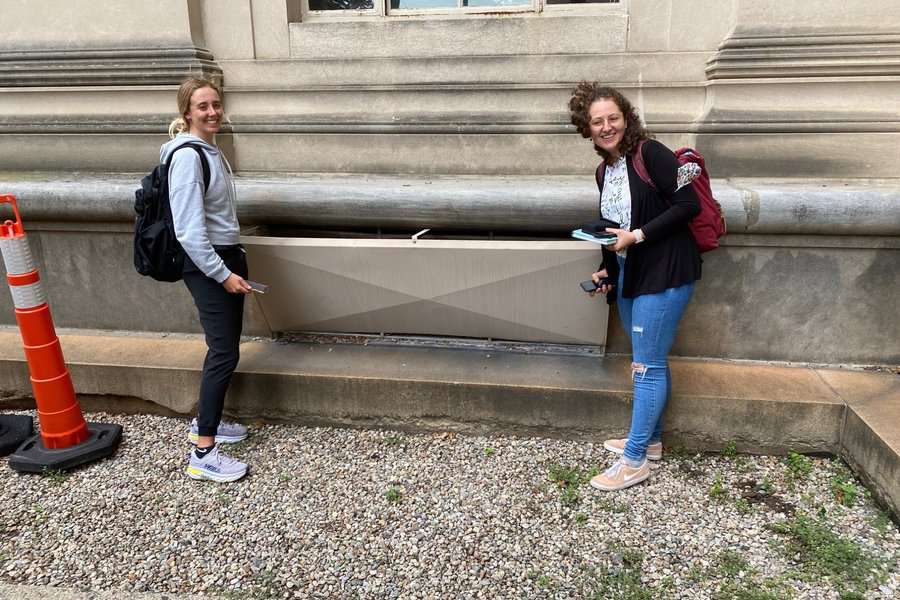
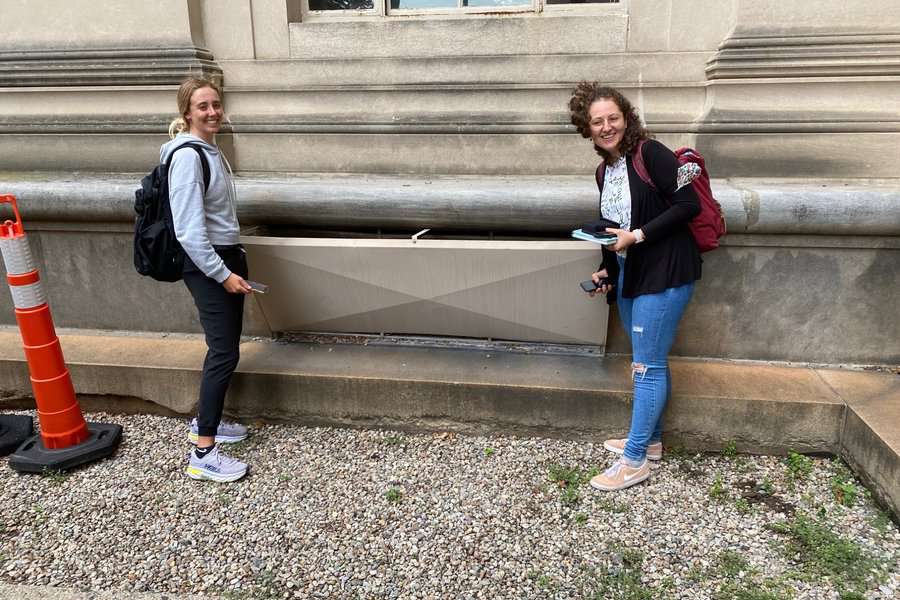
At MIT, it’s not uncommon to see groups navigating campus with smartphones and measuring devices in hand, using the Institute as a test bed for research. During one week this summer more than a dozen students, researchers, and faculty, plus an altimeter, could be seen doing just that as they traveled across MIT to measure the points of entry into campus buildings — including windows, doors, and vents — known as a building’s porosity.

Why measure campus building porosity?

The group was part of the MIT Porosity Hunt, a citizen-science effort that is using the MIT campus as a place to test emerging methodologies, instruments, and data collection processes to better understand the potential impact of a changing climate — and specifically storm scenarios resulting from it — on infrastructure. The hunt is a collaborative effort between the Urban Risk Lab, led by director and associate professor of architecture and urbanism Miho Mazereeuw, and the Office of Sustainability (MITOS), aimed at supporting an MIT that is resilient to the impacts of climate change, including flooding and extreme heat events. Working over three days, members of the hunt catalogued openings in dozens of buildings across campus to better support flood mapping and resiliency planning at MIT.

For Mazereeuw, the data collection project lies at the nexus of her work with the Urban Risk Lab and as a member of MIT’s Climate Resiliency Committee. While the lab’s mission is to “develop methods, prototypes, and technologies to embed risk reduction and preparedness into the design of cities and regions to increase resilience,” the Climate Resiliency Committee — made up of faculty, staff, and researchers — is focused on assessing, planning, and operationalizing a climate-resilient MIT. The work of both the lab and the committee is embedded in the recently released MIT Climate Resiliency Dashboard, a visualization tool that allows users to understand potential flooding impacts of a number of storm scenarios and drive decision-making.

While the debut of the tool signaled a big advancement in resiliency planning at MIT, some, including Mazereeuw, saw an opportunity for enhancement. In working with Ken Strzepek, a MITOS Faculty Fellow and research scientist at the MIT Center for Global Change Science who was also an integral part of this work, Mazereeuw says she was surprised to learn that even the most sophisticated flood modeling treats buildings as solid blocks. With all buildings being treated the same, despite varying porosity, the dashboard is limited in some flood scenario analysis. To address this, Mazereeuw and others got to work to fill in that additional layer of data, with the citizen science efforts a key factor of that work. “Understanding the porosity of the building is important to understanding how much water actually goes in the building in these scenarios,” she explains.

Though surveyors are often used to collect and map this type of information, Mazereeuw wanted to leverage the MIT community in order to collect data quickly while engaging students, faculty, and researchers as resiliency stewards for the campus. “It’s important for projects like this to encourage awareness,” she explains. “Generally, when something fails, we notice it, but otherwise we don’t. With climate change bringing on more uncertainty in the scale and intensity of events, we need everyone to be more aware and help us understand things like vulnerabilities.”

To do this, MITOS and the Urban Risk Lab reached out to more than a dozen students, who were joined by faculty, staff, and researchers, to map porosity of 31 campus buildings connected by basements. The buildings were chosen based on this connectivity, understanding that water that reaches one basement could potentially flow to another.

Urban Risk Lab research scientists Aditya Barve and Mayank Ojha aided the group’s efforts by creating a mapping app and chatbot to support consistency in reporting and ease of use. Each team member used the app to find buildings where porosity points needed to be mapped. As teams arrived at the building exteriors, they entered their location in the app, which then triggered the Facebook and LINE-powered chatbot on their phone. There, students were guided through measuring the opening, adjusting for elevation to correlate to the City of Cambridge base datum, and, based on observable features, noting the materials and quality of the opening on a one-through-three scale. Over just three days, the team, which included Mazereeuw herself, mapped 1,030 porosity points that will aid in resiliency planning and preparation on campus in a number of ways.

“The goal is to understand various heights for flood waters around porous spots on campus,” says Mazereeuw. “But the impact can be different depending on the space. We hope this data can inform safety as well as understanding potential damage to research or disruption to campus operations from future storms.”

The porosity data collection is complete for this round — future hunts will likely be conducted to confirm and converge data — but one team member’s work continues at the basement level of MIT. Katarina Boukin, a PhD student in civil and environmental engineering and PhD student fellow with MITOS, has been focused on methods of collecting data beneath buildings at MIT to understand how they would be impacted if flood water were to enter. “We have a number of connected basements on campus, and if one of them floods, potentially all of them do,” explains Boukin. “By looking at absolute elevation and porosity, we’re connecting the outside to the inside and tracking how much and where water may flow.” With the added data from the Porosity Hunt, a complete picture of vulnerabilities and resiliency opportunities can be shared.

Synthesizing much of this data is where Eva Then ’21 comes in. Then was among the students who worked to capture data points over the three days and is now working in ArcGIS — an online mapping software that also powers the Climate Resiliency Dashboard — to process and visualize the data collected. Once completed, the data will be incorporated into the campus flood model to increase the accuracy of projections on the Climate Resiliency Dashboard. “Over the next decades, the model will serve as an adaptive planning tool to make campus safe and resilient amid growing climate risks,” Then says.

For Mazereeuw, the Porosity Hunt and data collected additionally serve as a study in scalability, providing valuable insight on how similar research efforts inspired by the MIT test bed approach could be undertaken and inform policy beyond MIT. She also hopes it will inspire students to launch their own hunts in the future, becoming resiliency stewards for their campus and dorms. “Going through measuring and documenting turns on and shows a new set of goggles — you see campus and buildings in a slightly different way,” she says, “Having people look carefully and document change is a powerful tool in climate and resiliency planning.” 

Mazereeuw also notes that recent devastating flooding events across the country, including those resulting from Hurricane Ida, have put a special focus on this work. “The loss of life that occurred in that storm, including those who died as waters flooded their basement homes  underscores the urgency of this type of research, planning, and readiness.”


from ScienceBlog.com https://ift.tt/3l2EICt

An Ancient Burst of Salty Air

An Ancient Burst of Salty Air

Muddied bricks and
melted sheets of bronze
disclose the
revelation of
your erasure.
Between molten pots
and shattered bones
a flash of heat
scars the earth,
fractured branding
imbued with the debris
of your obliterated past.
Fire,
brimstone,
air,
and salt,
flicker in silent witness
that you were ever
really there.

An Ancient Burst of Salty Air
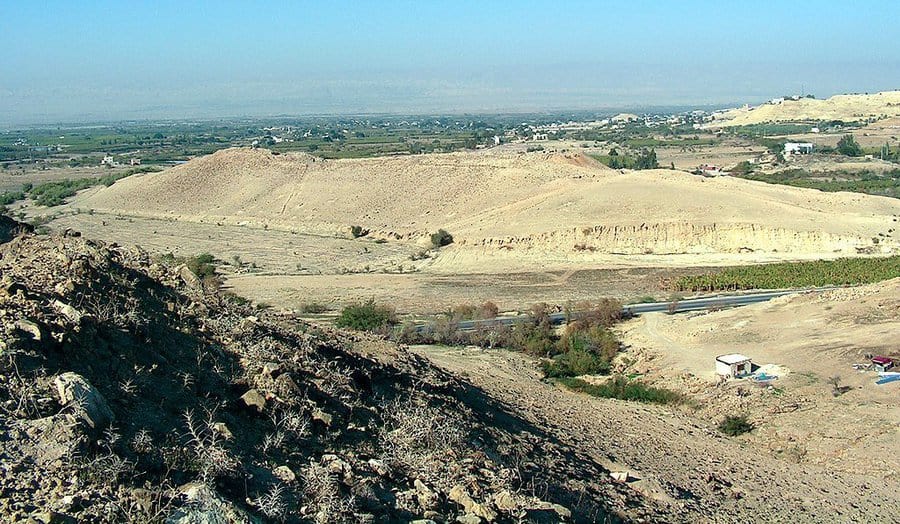
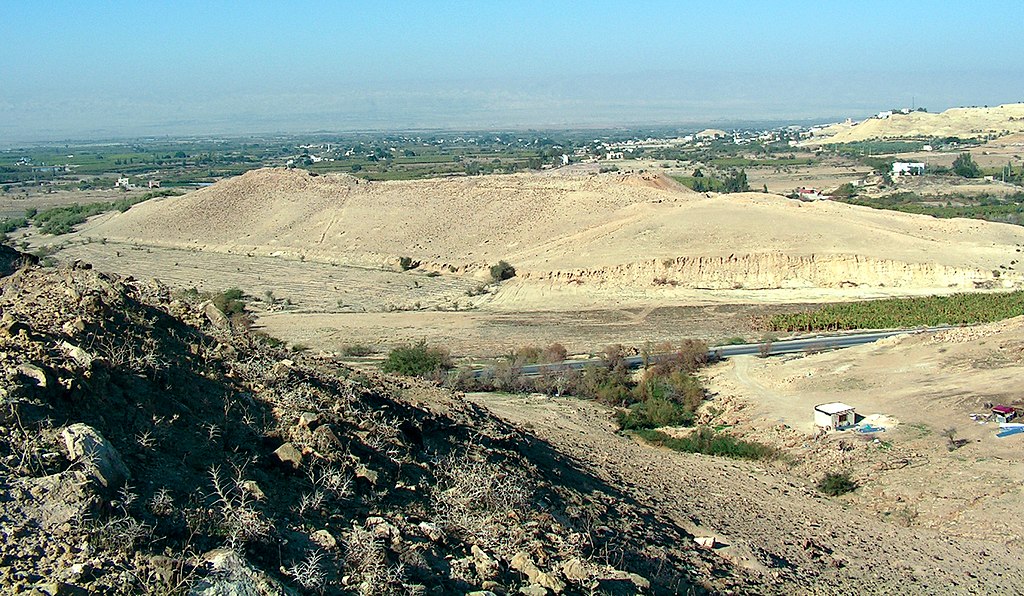
The archaeological site of Tall el-Hammam, Jordan that overlooks the Jordan Valley. Jericho is visible on the horizon and Tall Kefrein is visible in the distance on the right side out on the valley (Image Credit: Deg777).

This poem is inspired by recent research, which has found that a cosmic impact destroyed a Middle Bronze Age city in the Jordan Valley.

Tall el-Hammam was an ancient walled city in the southern Jordan Valley located northeast of the Dead Sea. Previous research has shown that this region hosts evidence of human settlements from the Copper Age (5000 to 3300 BCE) to the Bronze Age (3300 to 1200 BCE). However, there is a strange 1.5-meter interval in the Middle Bronze Age II stratum (around 1650 BCE) that contains highly unusual materials. In addition to the debris from destruction via warfare and earthquakes, this layer has also been found to contain pottery shards with outer surfaces melted into glass, partially melted building material, and fragmented human remains, all indications of an anomalously high-temperature event (greater than 2,000 degrees Celsius), much hotter than anything that the technology of the time could have produced.

In this new study, researchers suggest that this destruction event was caused by a cosmic airburst, a burst of air resulting from a meteor exploding as it hits the thicker part of Earth’s atmosphere. Such an event can detonate with an incredible amount of heat and energy, generating shockwaves that can level buildings across a large area. In addition to the high temperatures needed to produce the debris found in the destruction layer, proof for this airburst is demonstrated by the discovery of shocked quartz, sand grains containing cracks that form only under very high pressure. An airburst may also explain the extremely high concentrations of salt found in the destruction layer (which was as high as 25% in some samples). Salt would have been created due to the high impact pressures, and then spread out across the region. This high-salinity soil was potentially responsible for the so-called ‘Late Bronze Age Gap’, in which cities along the lower Jordan Valley were abandoned, as nothing could grow in these formerly fertile grounds, forcing people to leave the area for centuries. The researchers conclude that similarly devastating cosmic events are expected to recur every few thousand years, and while the risk is low, the huge amount of potential damage encourages the development of future mitigation strategies.


from ScienceBlog.com https://ift.tt/3ikXWS3

Menopausal hormone therapy not linked to increased risk of developing dementia

Menopausal hormone therapy not linked to increased risk of developing dementia

Use of menopausal hormone therapy (MHT, also known as hormone replacement therapy, HRT) is not associated with an increased risk of developing dementia, regardless of hormone type, dose, or duration, concludes a large UK study published by The BMJ today.

Within the subgroup of women with a specific diagnosis for Alzheimer’s disease, a slight increasing risk association was found with use of oestrogen-progestogen treatments, but measurable only for long-term usage (5 years or more).

The researchers say this study “brings clarity to previously inconsistent findings and should reassure women in need of menopausal hormonal therapy.”

MHT is used to relieve menopausal symptoms such as hot flushes, sleep disturbance, mood swings, memory losses and depression. Treatments include tablets containing oestrogen only, or a combination of oestrogen and progestogen, as well as patches, gels and creams.

Some menopausal symptoms are similar to early signs of dementia. Laboratory studies and small trials have suggested a beneficial link between oestrogen and age related brain decline. However, the largest trial of MHT, the Women’s Health Initiative Memory Study, found an increased risk of developing dementia among users of oestrogen-progestogen treatments.

A recent large observational study in Finland flagged an increased risk of developing Alzheimer’s disease among users of both oestrogen-only and oestrogen-progestogen treatments, but the study had some methodological weaknesses.

To address this uncertainty, researchers at the Universities of Nottingham, Oxford and Southampton set out to investigate the risks of developing dementia for women using any of the menopausal hormone therapy treatments commonly prescribed within the UK National Health Service.

They used two UK primary care databases (QResearch and CPRD) to analyse MHT prescriptions for the 118,501 women aged 55 and older diagnosed with dementia between 1998 and 2020 (cases), and 497,416 women matched by age and general practice, but with no records for dementia (controls).

All information from MHT prescriptions issued more than three years before the case diagnosis was used, including hormone type, dose, and method of administration.

Other relevant factors, such as family history, smoking, alcohol consumption, pre-existing conditions (comorbidities), and other prescribed drugs were taken into account in the analysis.

Overall, 16,291 (14%) cases and 68,726 (14%) controls had been exposed to menopausal hormone therapy in the period up to three years before diagnosis.

After adjusting for the full range of potentially confounding factors, the researchers found no overall associations between use of hormone therapy and risk of dementia, regardless of hormone type, application, dose, or duration of treatment.

Within the subgroup of younger than 80 years who had been taking oestrogen-only therapy for 10 years or more, they found a slightly decreased risk of dementia.

However, an analysis of cases with a specific diagnosis of Alzheimer’s disease showed a slight increase in risk associated with oestrogen-progestogen therapy. This rose gradually with each year of exposure, reaching an average 11% increased risk for use of between 5 and 9 years and an average 19% for use of 10 years or more – equivalent to, respectively, five and seven extra cases per 10,000 woman years.

This is an observational study, so cannot establish cause, and the researchers acknowledge some limitations, such as incomplete recording of menopausal symptoms, particularly for women registered after their menopause, that may have affected their results.

However, the study used a large data sample from primary care records and was designed not only to assess overall risk for women exposed to different types of long term hormone therapy but also to explore the differences between component hormones, offering new, more reliable estimates for doctors and their patients.

The researchers say this study provides the most detailed estimates of risk for individual treatments, and their results are in line with existing concerns in guidelines about long term exposures to combined hormone therapy treatments.

“The findings will be helpful to policy makers, doctors, and patients when making choices about hormone therapy,” they conclude.

Overall, these observations do not change the recommendation that menopausal hormone therapy should not be used to prevent dementia, say US researchers in a linked opinion article. At the same time, it is helpful for providers to put dementia findings in context for patients, they add.

“The primary indication for hormone therapy continues to be the treatment of vasomotor symptoms, and the current study should provide reassurance for women and their providers when treatment is prescribed for that reason,” they conclude.


from ScienceBlog.com https://ift.tt/3AVPwba
Extra spacing can boost children’s reading speed

Extra spacing can boost children’s reading speed

New study finds significant benefits for both dyslexic and non-dyslexic children

A new study has found that a child’s reading speed can be improved by simply increasing the space between letters within a piece of text.

The research, led by Dr Steven Stagg of Anglia Ruskin University (ARU), examined the benefits of letter spacing and coloured overlays amongst a group of dyslexic and non-dyslexic children.  It is the first study to investigate how these adaptations can help to reduce specific reading errors.

Published in the journal Research in Developmental Disabilities, the study discovered that text with increased space between each letter provided a benefit to both groups of children. On average, the dyslexia group showed a 13% increase in reading speed, while the comparison group of non-dyslexic children showed a 5% increase in reading speed.

The study involved 59 children aged between 11-15, 32 of whom had a statement of dyslexia, with 27 non-dyslexic children forming a control group. The participants were recruited from six schools in Cambridgeshire, Hertfordshire and London.

Participants read four texts with either standard or extra-large letter spacing, both with and without a coloured overlay. The children were instructed to read the text out loud while being recorded. The recording was used to measure the number of errors they made – specifically missed words, added words, wrong words, and pronunciation – as well as the participants’ reading time.

In addition to improved reading speed for both children with dyslexia and the non-dyslexic group, the larger letter spacing also resulted in a significant reduction in the number of words being missed by the children with dyslexia.  However, the study found that coloured overlays had no significant impact on reading speed or the reduction of errors for either group of children.

Dr Stagg, Senior Lecturer in Psychology at Anglia Ruskin University (ARU), said:

“We found that extra-large letter spacing increases the reading speed of children both with and without dyslexia, and significantly reduces the number of words that dyslexic children skip when reading.

“We believe that extra-large letter spacing works by reducing what is known as the ‘crowding effect’, which can hamper the recognition of letters and reduce reading speed.

“When viewed in the context of previous research, our findings strongly suggest that teaching professionals can be confident that all children would be helped by increased letter spacing in reading materials. As well as being a relatively simple change to make when producing handouts and worksheets, it means that children with dyslexia need not feel singled out by the introduction of specially adapted reading materials, as this is something that everyone can benefit from.

“While we found that colour overlays provided little benefit, we suggest that children should be encouraged to use overlays if they find these help their reading. Colour overlays may not increase reading speeds, but they may extend reading stamina. Previous research suggests their benefits may not become apparent if reading time is less than 10 minutes and the short reading duration of the tests in our study may have put colour overlays at a disadvantage.”


from ScienceBlog.com https://ift.tt/39Sw8jq

Genetic risks for depression differ between East Asian and European groups

Genetic risks for depression differ between East Asian and European groups
Specific genes increase the risk of developing depression, according to a new study led by UCL researchers, which also shows that the genes associated with depression vary depending on ancestry group.

The research, published in JAMA Psychiatry, is the largest study into the genetic risks of depression conducted in non-European populations. Using data from East Asian populations, mostly from China, the researchers identified five new gene variants linked to depression but found that the genes linked to depression are different for European and East Asian groups.

For example, people of East Asian descent with higher body mass index are less likely to develop depression, contrary to findings for people of European descent.

Previous studies have identified potential genes involved in depression, but most of these studies looked only at white populations.

The new study provides a better understanding of the underlying biology of depression by identifying differences in the way genes and depression are linked in different populations.

Lead author Professor Karoline Kuchenbäcker (UCL Psychiatry) said: “We were surprised to find many differences in the depression genes for Europeans and East Asians, which shows the need to increase the diversity of samples in these types of studies and to be cautious about generalising findings about genes in causing depression.

“Genetic research has the potential to contribute to new treatments. But if the foundational research did not involve appropriately diverse study populations, then new treatments might not work the same for everyone, and may contribute to health disparities.”

Co-author Professor Cathryn Lewis (King’s College London) said: “While depression is a very common illness, we still understand little about its causes. By identifying the genes involved with depression, we can better investigate the mechanisms of the illness, and it is important to study the genetics of depression in all regions of the world.”

The genome-wide association study, funded by Wellcome and the European Research Council, used genetic data from 194,548 people of East Asian ancestry (15,771 of whom had depression). The study was done in collaboration with the Psychiatric Genomics Consortium, the largest collaborative group of scientists in this field.


from ScienceBlog.com https://ift.tt/3A07Xdw

Featured Post

A double-edged sword: the growing complexity of Medical Affairs publication performance data

The variety of channels and audiences that define scientific communications reach and engagement is growing. In turn, Medical Affairs teams...

Popular